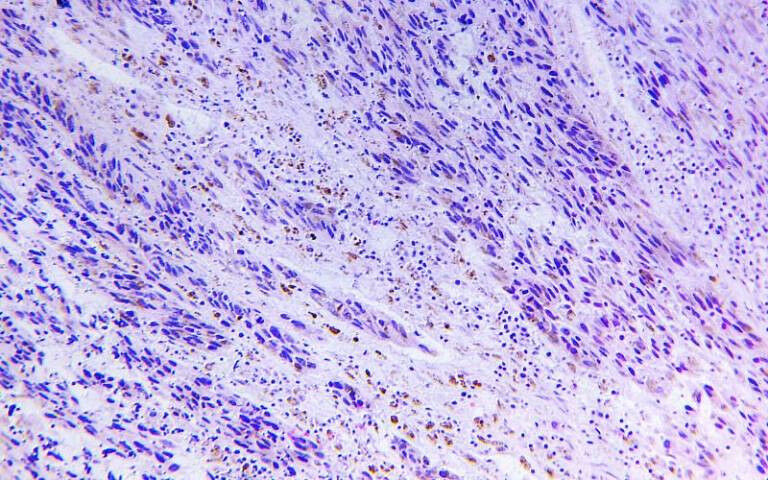
Melanoma close-up
Melanoma close-up A study, co-led by researchers at UCL, has revealed how some skin cancers stop responding to treatment at the end of life. The discovery, scientists say, provides vital clues for developing new treatments for those with a terminal diagnosis. An in-depth analysis of 14 patients who died from incurable melanoma has revealed that changes to the order, structure and number of copies of tumour DNA could cause some skin cancers to resist treatment. These changes also explain how melanoma can spread to other parts of the body. The research, published in the journal Cancer Discovery, was led by scientists and clinicians at the UCL Cancer Institute, the Francis Crick Institute and The Royal Marsden. It is part of the Cancer Research UK-funded PEACE study, which is shedding light on the final stages of life with cancer by analysing tumour samples taken from autopsies with informed consent. Dr Mariam Jamal-Hanjani, Clinical Associate Professor at UCL Cancer Institute and lead investigator of the PEACE study, said: "These results present the most detailed picture yet of what melanoma looks like at the final stages of life.
TO READ THIS ARTICLE, CREATE YOUR ACCOUNT
And extend your reading, free of charge and with no commitment.