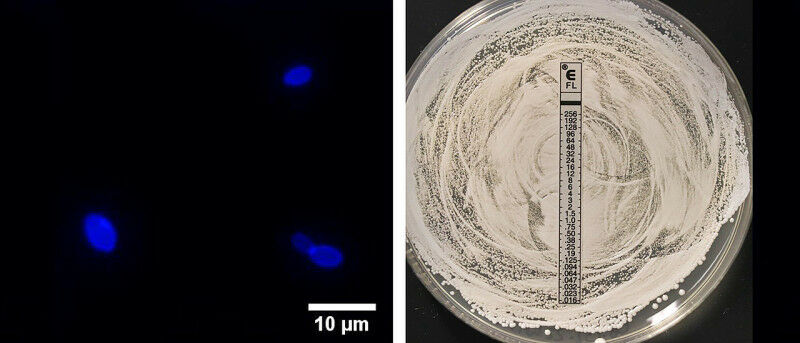
Infections with Candida auris are difficult to treat and potentially life-threatening. The picture shows yeast cells of C. auris on the left and a fluconazole-resistant C. auris strain on the right. (Image: Alexander Aldejohann)
Infections with Candida auris are difficult to treat and potentially life-threatening. The picture shows yeast cells of C. auris on the left and a fluconazole-resistant C. auris strain on the right. (Image: Alexander Aldejohann) The number of infections with the fungus Candida auris is also increasing in Germany. This is shown in a new study by research teams from Würzburg, Jena and Berlin. Despite low numbers, scientists advise precautionary measures. Among the yeasts from the Candida genus that cause infections in humans, the species Candida auris is still relatively new: this species was only described in 2009, and to date no evidence has been found before the 1990s. It is unclear what ecological niche C. auris colonizes and why human infections have increased since around the turn of the millennium.
TO READ THIS ARTICLE, CREATE YOUR ACCOUNT
And extend your reading, free of charge and with no commitment.