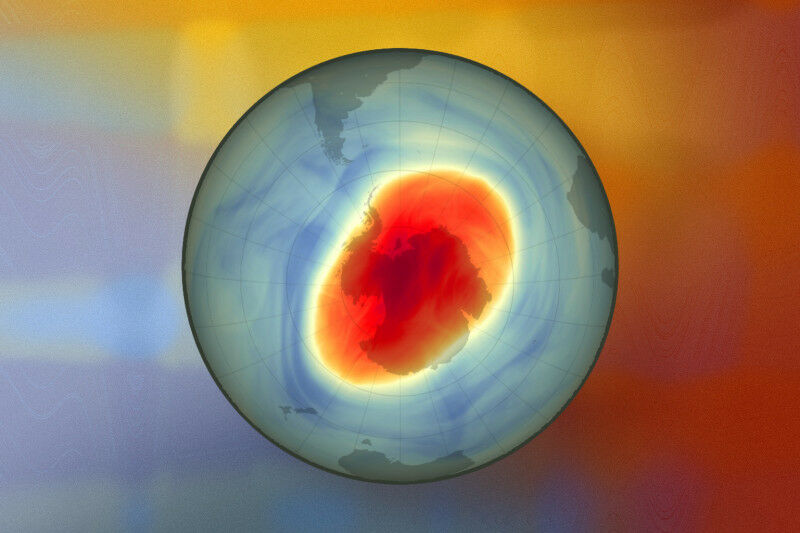
An MIT study finds that smoke particles in the stratosphere can trigger chemical reactions that erode the ozone layer - and that smoke particles from Australian wildfires widened the ozone hole by 10 percent in 2020. This map shows the size and shape of the ozone hole over the South Pole on Oct. 5, 2022. Credits : Credits: NASA Earth Observatory image by Joshua Stevens. Edited by MIT News.
An MIT study finds that smoke particles in the stratosphere can trigger chemical reactions that erode the ozone layer - and that smoke particles from Australian wildfires widened the ozone hole by 10 percent in 2020. This map shows the size and shape of the ozone hole over the South Pole on Oct. Credits : Credits: NASA Earth Observatory image by Joshua Stevens. Edited by MIT News. MIT chemists show the Australian wildfires widened the ozone hole by 10 percent in 2020. Close A wildfire can pump smoke up into the stratosphere, where the particles drift for over a year. A new MIT study has found that while suspended there, these particles can trigger chemical reactions that erode the protective ozone layer shielding the Earth from the sun's damaging ultraviolet radiation.
TO READ THIS ARTICLE, CREATE YOUR ACCOUNT
And extend your reading, free of charge and with no commitment.