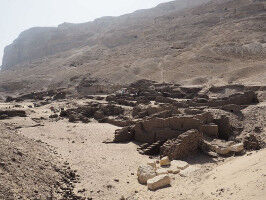
The Saqqara Saite Tombs Project excavation area, overlooking the pyramid of Unas and the step pyramid of Djoser north-facing
The Saqqara Saite Tombs Project excavation area, overlooking the pyramid of Unas and the step pyramid of Djoser north-facing - Analyzing the residue on vessels in a mummification workshop has given a team of researchers from LMU Munich and the University of fresh insights into how the ancient Egyptians embalmed the bodies of their dead. The archeologists have been able to determine what substances were used for which part of the body. Many of the substances used came not from Egypt, but from the whole Mediterranean region, tropical rainforests and even Southeast Asia - evidence of early global networking. Exactly 100 years ago, the tomb of Tutankhamun was discovered, complete with his world-famous mummy. Since then, researchers have learned a lot about how the ancient Egyptians prepared bodies for mummification. Until now, however, too little was known about how they ultimately made the bodies of the deceased immortal by embalming them. A German-Egyptian team of researchers has now been able to gain completely new insights into the chemistry of embalming.
TO READ THIS ARTICLE, CREATE YOUR ACCOUNT
And extend your reading, free of charge and with no commitment.