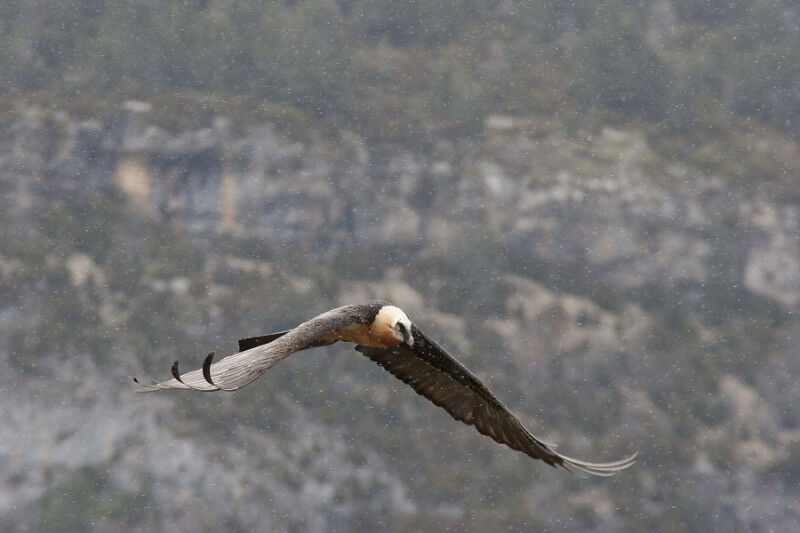
 A bearded vulture flying.
A bearded vulture flying. Vulture Conservation Foundation. Coprolites, or fossil faeces from around 30,000 years ago, have been used to identify the presence of bearded vultures ( Gypaetus barbatus ) at the Palaeolithic site of Lagar Velho (Portugal). A comparison of the coprolites found in the excavations with the faeces of present-day lammergeyers has confirmed the presence of these animals in the past. The research study, published in the journal Scientific Reports , points out the importance of identifying the coprolites when documenting the presence of these birds in the sites and studying the relationship they had with prehistoric human communities. The identification of this nest allows us to know how this vulture lived, which is characterised by a peculiar diet, as 70-80% of its food consists of bones. The valley in which the site is located must have been an optimal place for this species to establish nests, as confirmed by the large number of coprolites recovered in the excavation, as well as the bones digested by this vulture.
TO READ THIS ARTICLE, CREATE YOUR ACCOUNT
And extend your reading, free of charge and with no commitment.
Your Benefits
- Access to all content
- Receive newsmails for news and jobs
- Post ads