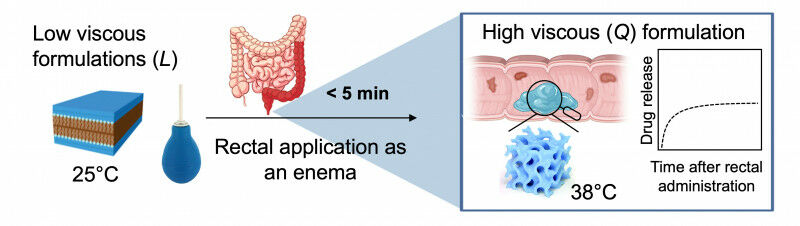
 For their self-forming gel, the researchers chose a lipid that is well tolerated and safe for use in humans. It is a fluid material at room temperature and can be administered as an enema into the inflamed area of the colon. There, at body temperature, it forms a viscous and sticky gel and remains adherent for at least six hours, gradually releasing the active ingredient.
For their self-forming gel, the researchers chose a lipid that is well tolerated and safe for use in humans. It is a fluid material at room temperature and can be administered as an enema into the inflamed area of the colon. There, at body temperature, it forms a viscous and sticky gel and remains adherent for at least six hours, gradually releasing the active ingredient. University of Bern, Marianna Carone - Treatment of the chronic inflammatory bowel disease ulcerative colitis often produces unsatisfactory results. Researchers at the University of Bern have now developed a lipid gel that is administered directly to the inflamed part of the intestine, where it remains and releases its active substance evenly. This could result in a new, targeted therapy approach with fewer side effects. For diseases that affect a specific organ or tissue, a drug is usually most effective and well-tolerated if it is administered exactly where it is supposed to work in the body.
TO READ THIS ARTICLE, CREATE YOUR ACCOUNT
And extend your reading, free of charge and with no commitment.
Your Benefits
- Access to all content
- Receive newsmails for news and jobs
- Post ads