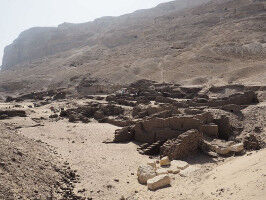
An international team of researchers who discovered a vast network of stone walls along the River Nile in Egypt and Sudan say these massive 'river groynes' reveal an exceptionally long-lived form of hydraulic engineering in the Nile Valley, and shed light on connections between ancient Nubia and Egypt. The findings of this study - conducted as part of the British Museum's Amara West Research Project, in collaboration with the Sudanese National Corporation for Antiquities and Museums - have just been published in the journal Geoarchaeology . Extensive Mapping: Lead author, Dr Matthew Dalton of The University of Western Australia, said "we used satellite imagery, drone and ground surveys, as well as historical sources, to locate nearly 1300 river groynes between the 1 Cataract in southern Egypt and the 4 Cataract in Sudan." Rediscovery of Lost Walls: Hundreds of these groynes are now submerged beneath the Aswan High Dam reservoir, and were relocated in 19th century travellers' diaries, a 200-year-old map, and archives of aerial photographs, including some taken by the Royal Air Force in 1934. Ancient Origins: Many river groynes are now located in the desert, within ancient, dry Nile channels. "We know that reaches of the Nile in Sudan had multiple channels earlier in the Holocene and many of them dried out when river flows decreased due to climate change," said study co-author Professor Jamie Woodward of The University of Manchester. " The occurrence of these walls in channels that dried out thousands of years ago strongly suggests some of this engineering was in response to waning flows and the need to expand the riparian area suitable for agriculture.
TO READ THIS ARTICLE, CREATE YOUR ACCOUNT
And extend your reading, free of charge and with no commitment.