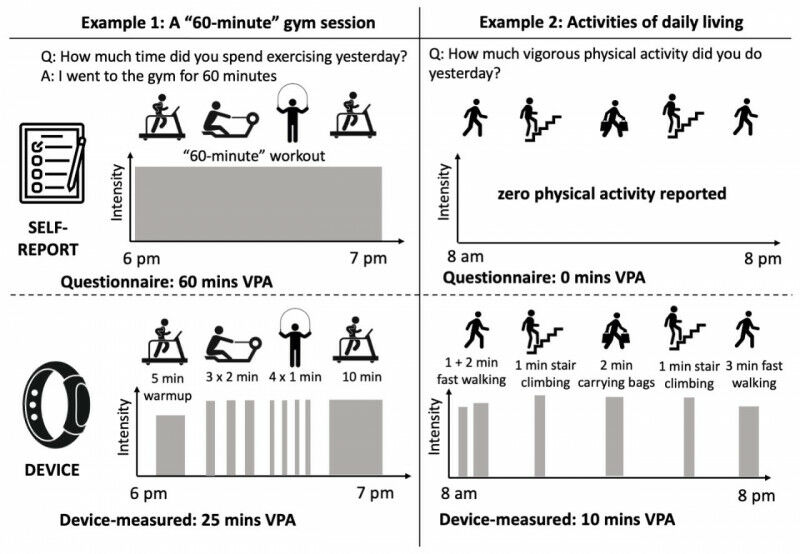
Physical activity captured by self-report questionnaire (top panels) versus wearable device (bottom panels) in two different scenarios. Source: Figure 1 in Gill JMR, et al. Br J Sports Med August 2023
Physical activity captured by self-report questionnaire ( top panels ) versus wearable device ( bottom panels ) in two different scenarios. Source: Figure 1 in Gill JMR, et al. Br J Sports Med August 2023 Exploring the potential of wearables for chronic disease diagnosis, prevention, and treatment Wearable technology presents immense opportunities to improve the way we live our lives, but a group of international researchers say the rapidly developing field also brings big challenges. In a series of three editorials published in the British Journal of Sports Medicine , the international team of scientists discuss issues facing the wearables field including lack of standardisation of devices and data, disconnects between research and industry and the impact of inequality in ownership. Currently around a third of UK adults own a smartwatch or fitness tracker. A 2021 Australian-based survey reported 24 percent used fitness trackers and 23 percent used smartwatches. Some use them to track their steps, others their sleep, but few understand the potential of these devices to transform our understanding of how everyday activity influences health.
TO READ THIS ARTICLE, CREATE YOUR ACCOUNT
And extend your reading, free of charge and with no commitment.