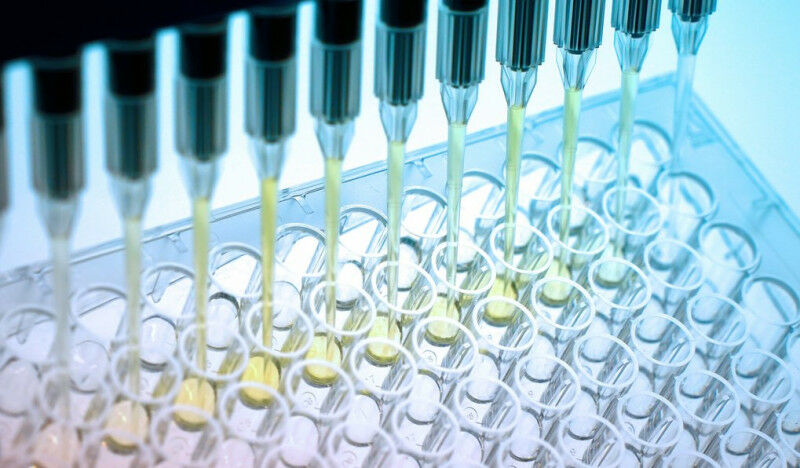
 Formate can be envisioned at the core of a carbon-neutral bioeconomy, where it is produced from CO2 by (electro-)chemical means and converted into value-added products by enzymatic cascades or engineered microbes. A key step in expanding synthetic formate assimilation is its thermodynamically challenging reduction to formaldehyde, visible here as a yellow color change.
Formate can be envisioned at the core of a carbon-neutral bioeconomy, where it is produced from CO2 by (electro-)chemical means and converted into value-added products by enzymatic cascades or engineered microbes. A key step in expanding synthetic formate assimilation is its thermodynamically challenging reduction to formaldehyde, visible here as a yellow color change. Max Planck Institute for Terrestrial Microbiology/Geisel - New synthetic metabolic pathways for fixation of carbon dioxide could not only help to reduce the carbon dioxide content of the atmosphere, but also replace conventional chemical manufacturing processes for pharmaceuticals and active ingredients with carbon-neutral, biological processes. A new study demonstrates a process that can turn carbon dioxide into a valuable material for the biochemical industry via formic acid. In view of rising greenhouse gas emissions, carbon capture, the sequestration of carbon dioxide from large emission sources, is an urgent issue. In nature, carbon dioxide assimilation has been taking place for millions of years, but its capacity is far from sufficient to compensate man-made emissions. Researchers led by Tobias Erb at the Max Planck Institute for Terrestrial Microbiology are using nature's toolbox to develop new ways of carbon dioxide fixation.
TO READ THIS ARTICLE, CREATE YOUR ACCOUNT
And extend your reading, free of charge and with no commitment.
Your Benefits
- Access to all content
- Receive newsmails for news and jobs
- Post ads