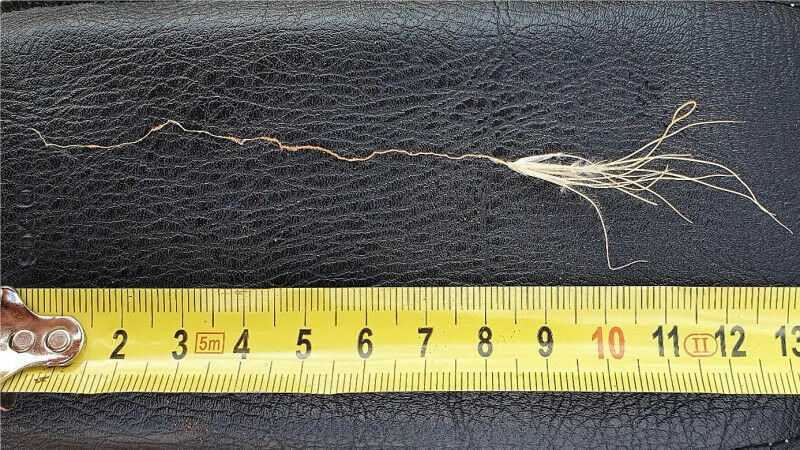
Small grass plant dead in the fairy circle 19 days after the rain: The root does not reach the more moist soil layers below the ’death zone’ and because of the low transpiration from its spindly leaves, the plant cannot ’suck’ more moisture from the soil. Photo: Stephan Getzin
Small grass plant dead in the fairy circle 19 days after the rain: The root does not reach the more moist soil layers below the 'death zone' and because of the low transpiration from its spindly leaves, the plant cannot 'suck' more moisture from the soil. Photo: Stephan Getzin Researchers describe topsoil as "death zone" for fresh grass in the fairy circle. Namibia's legendary fairy circles are mysterious, circular, bald patches in the dry grasslands on the edge of the Namib Desert. Their formation has been researched for decades and has recently been the subject of much debate. With extensive fieldwork, researchers from the University of Göttingen in Germany and Ben Gurion University in Israel investigated how freshly germinated grass dies inside the fairy circle. Their results show that the grass withers due to a lack of water inside the fairy circle. The topsoil, comprised of the top 10 to 12 centimetres of the soil, acts as a kind of "death zone" in which fresh grass cannot survive for long.
TO READ THIS ARTICLE, CREATE YOUR ACCOUNT
And extend your reading, free of charge and with no commitment.