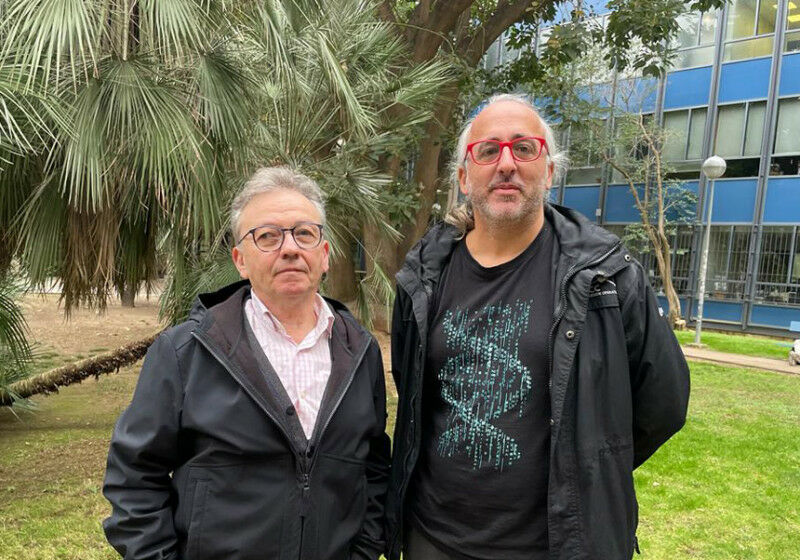
J. Emili Aura Tortosa (left) and Domingo C. Salazar-García (right) at the Blasco Ibáñez campus of the University of Valencia.
A study shows great genetic differences of the European population in the Palaeolithic and Neolithic. J. Emili Aura Tortosa ( left ) and Domingo C. Salazar-García ( right ) at the Blasco Ibáñez campus of the University of Valencia. The University of Valencia (UV) participates in an international study published in Nature magazine and led by the University of Copenhaguen in which more than 1,600 ancient human genomes are analysed to shed unprecedented insights into the past human gene pools of western Eurasia (current Europe). In the study have participated J. Emili Aura Tortosa, researcher and UV full professor, and CIDEGENT researcher Domingo C. Salazar-García, both from the Department of Prehistory, Archaeology and Ancient History. The study shows that genetic differences between ancient populations in western Eurasia were substantially higher than previously estimated, and also much higher than observed in present-day populations. This differentiation was partly because of the existence of an invisible genetic barrier across Europe. Archaeologists have long pointed to an apparent cultural barrier persisting throughout the Mesolithic and Neolithic from the Black Sea in the south to the Baltic Sea region in the north.
TO READ THIS ARTICLE, CREATE YOUR ACCOUNT
And extend your reading, free of charge and with no commitment.