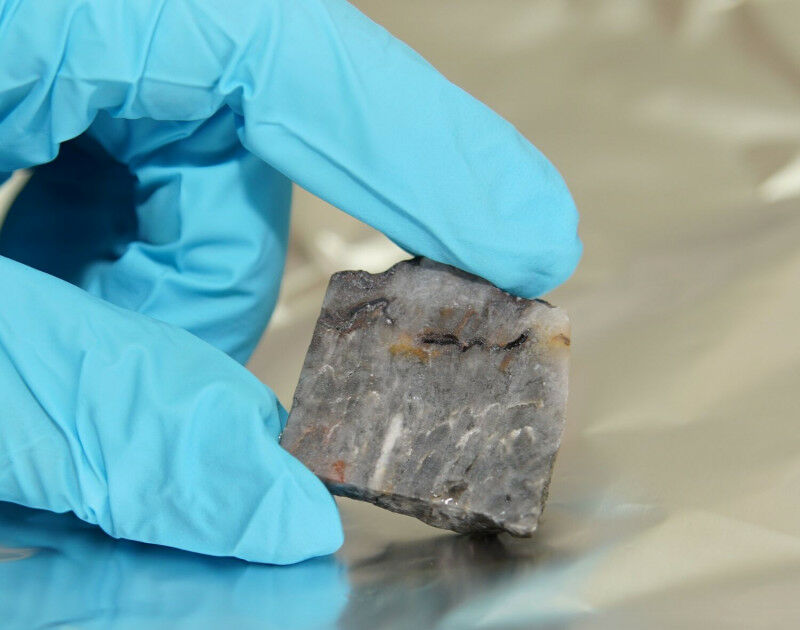
Rocks made of barium sulphate (known as barite rocks) from the from the Pilbara Craton in Western Australia Photo: Gerhard Hundertmark
Rocks made of barium sulphate (known as barite rocks) from the from the Pilbara Craton in Western Australia Photo: Gerhard Hundertmark Research team analyses organic material from the early Earth tracing its origin and composition. To learn about the first organisms on our planet, researchers have to analyse the rocks of the early Earth. These can only be found in a few places on the surface of the Earth. The Pilbara Craton in Western Australia is one of these rare sites: there are rocks there that are around 3.5 billion years old containing traces of the microorganisms that lived at that time. A research team led by the University of Göttingen has now found new clues about the formation and composition of this ancient biomass, providing insights into the earliest ecosystems on Earth. The results were published in the journal Precambrian Research . Barite quarry in the 'Dresser Formation' of the Pilbara Craton.
TO READ THIS ARTICLE, CREATE YOUR ACCOUNT
And extend your reading, free of charge and with no commitment.