


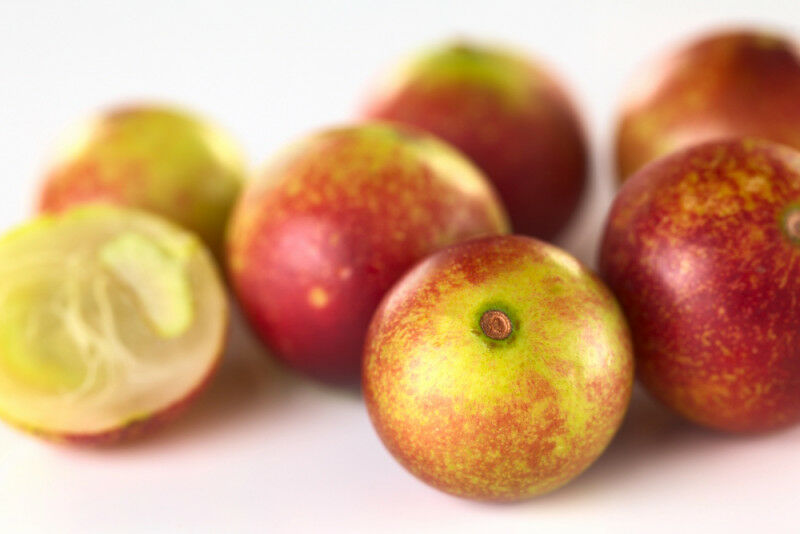
A Laval University research team has demonstrated the beneficial effects of camu-camu on non-alcoholic fatty liver disease, which affects over seven million people in Canada. This exotic fruit helps reduce liver fat levels.
Over a 12-week period, some 30 participants took camu-camu extract or a placebo at different times in this randomized clinical trial. Scientists observed a 7.43% decrease in liver lipids when study participants took camu-camu extract. When taking the placebo, they noted an 8.42% increase in liver fat.
"It’s a difference of 15.85%, which is significant," says André Marette , a professor in the Faculty of Medicine and researcher at the Institut universitaire de cardiologie et de pneumologie de Québec - Université Laval (IUCPQ - ULaval), who conducted the study.
Polyphenols and microbiota
This effect is thought to derive from the polyphenols contained in camu-camu and their relationship with the intestinal microbiota. "The microbiota metabolizes the large polyphenol molecules that cannot be absorbed by the intestine, transforming them into smaller molecules. The latter can then be assimilated and degrease the liver", explains André Marette.His team considers two potential mechanisms of action for these small polyphenols. "They could reduce lipogenesis, i.e. the formation of lipid droplets in the liver. They could also stimulate lipid degradation by oxidation. A combination of the two mechanisms probably explains the high efficacy of the extract, as we’re playing on both sides of the coin", reports Professor Marette, who collaborated with scientists from the Institut sur la nutrition et les aliments fonctionnels (INAF).
However, the team noted great variability in responses to camu-camu. "Our hypothesis is that the initial intestinal microbiota influences the response to polyphenols. If we find the factors responsible, we may be able to modify the microbiota and increase the efficacy of the extract", explains Professor Marette.
Although camu-camu is an exotic fruit, the extract is readily available in capsule form. Professor Marette warns, however, to check the content of certain polyphenols, as not all commercial products are equivalent.
Other fruits could have a protective effect, such as cranberry, which contains certain different polyphenols. In the future, Professor Marette would like to check whether a combination of camu-camu and cranberry could have a synergistic effect.
The study was published in the journal Cell Reports Medicine. Other signatories include Anne-Laure Agrinier, Arianne Morissette, Laurence Daoust, Théo Gignac, Julie Marois, Thibault V. Varin, Geneviève Pilon, Éric Larose, Claudia Gagnon, Yves Desjardins, Fernando F. Anhê, Anne-Marie Carreau and Marie-Claude Vohl.