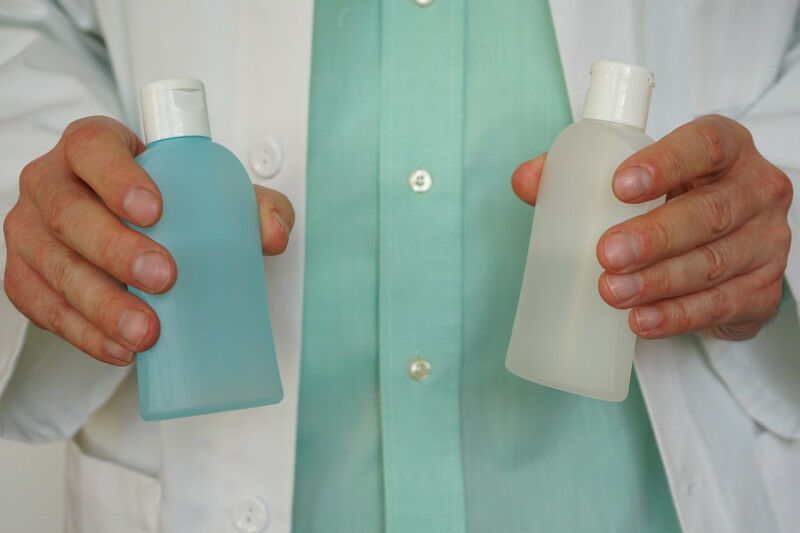
Surgery carries the risk of infection at the surgical site. Proper skin disinfection before the incision minimizes this risk. Two disinfectants are used worldwide for this purpose, one of which was previously considered to be better. A joint study by Inselspital, Bern University Hospital and the University of Bern in collaboration with the University Hospitals of Basel and Zurich now shows that both agents are equally effective. This is particularly important in countries with limited resources, as one agent is usually more readily available and less expensive.
There is a risk of wound infections with every surgical procedure. Such infections occur in around 0.5 to 3 percent of patients and can lead to serious complications. They are often caused by microorganisms that occur naturally on the skin. To minimize the risk of such infections, proper skin disinfection before the incision is crucial. Healthcare professionals are faced with a choice between two preparations that are widely used around the world: Chlorhexidine Gluconate and Povidone Iodine, both of which are used in alcohol-based solutions.
Global recommendations and scientific debates
In its guidelines, the World Health Organization (WHO) prefers alcohol-based solutions with chlorhexidine gluconate to povidone iodine for skin disinfection before surgery. This is because earlier studies had indicated a superiority of chlorhexidine gluconate in the reduction of wound infections. However, the corresponding studies were small and, with a low number of recorded infection events, were of limited significance. In addition, they were not very standardized in terms of disinfectant formulation and disinfection process. There are also growing concerns regarding the widespread use of chlorhexidine. As it is not only used in operating theatres but also in intensive care units for patient care, there is concern that bacteria could increasingly develop resistance to this disinfectant.
Clinical study shows equal effectiveness
As skin disinfectants are used in all surgical procedures worldwide, even small advantages of a substance have a global impact in the form of a large number of prevented infections. The University Hospital Basel and the Inselspital Bern, in collaboration with the University Hospital Zurich, have therefore initiated a comprehensive multicentre cluster-randomized study to compare the two substances. The study was funded by the Swiss National Science Foundation (SNSF).
The effectiveness of the two substances mentioned in the prevention of wound infections was compared. When planning and conducting the study, particular emphasis was placed on a standardized formulation of the preparations and application of the disinfectant.
The study involved 3360 patients who were undergoing planned abdominal or heart surgery at one of the three participating university hospitals. The people included were randomly assigned to one of the two preparations in each group. The results, which were recently published in the Journal of the American Medical Association (JAMA), show that povidone iodine is just as effective as chlorhexidine gluconate in preventing infections after abdominal or heart surgery.
’Our study can no longer confirm the advantage of chlorhexidine gluconate over alcohol-based iodine preparations. The additional substance as a second equivalent pre-operative skin disinfectant is particularly important given that iodine is usually more readily available and less expensive in resource-limited countries,’ explains Philipp Jent, last author of the study, adding: ’The results are likely to lead to adjustments in global pre-operative skin preparation guidelines and to hospitals worldwide rethinking their pre-operative skin disinfection protocols.