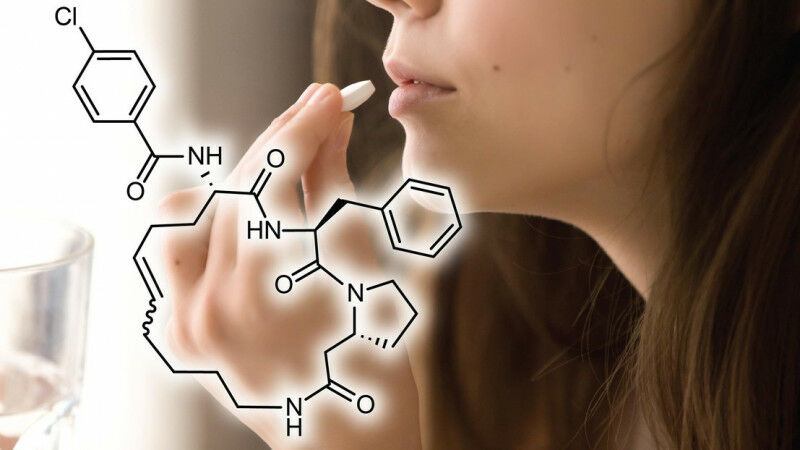
Credit: C. Heinis (EPFL)
Credit: C. Heinis (EPFL) - Scientists at EPFL have developed stable orally available cyclic peptides with a much higher bioavailability than current ones, virtually creating a generation of drugs that can target previously untreatable diseases like certain types of cancer. For decades, a substantial number of proteins, vital for treating various diseases, have remained elusive to oral drug therapy. Traditional small molecules often struggle to bind to proteins with flat surfaces or require specificity for particular protein homologs. Typically, larger biologics that can target these proteins demand injection, limiting patient convenience and accessibility. We have now succeeded in generating cyclic peptides that bind to a disease target of our choice and can also be administered orally. Professor Christian Heinis, EPFL - In a new study published in Nature Chemical Biology , scientists from the laboratory of Professor Christian Heinis at EPFL have achieved a significant milestone in drug development. Their research opens the door to a new class of orally available drugs, addressing a long-standing challenge in the pharmaceutical industry.
TO READ THIS ARTICLE, CREATE YOUR ACCOUNT
And extend your reading, free of charge and with no commitment.