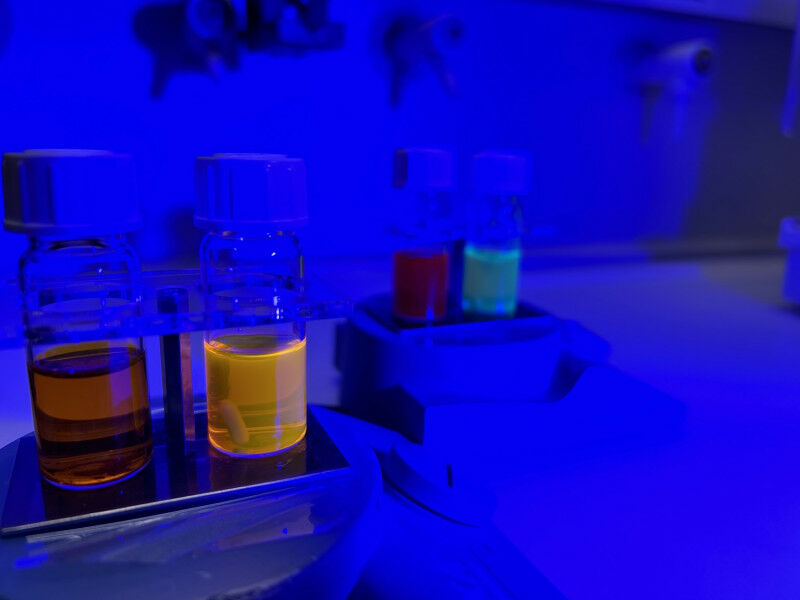
A research team at the University of Göttingen has discovered an innovative strategy in chemical synthesis that combines iron-mediated carbon-hydrogen bond conversion with the concept of photocatalysis. Photo: University of Göttingen/Ackermann research group
A research team at the University of Göttingen has discovered an innovative strategy in chemical synthesis that combines iron-mediated carbon-hydrogen bond conversion with the concept of photocatalysis. Photo: University of Göttingen/Ackermann research group Research team at Göttingen University develops environmentally friendly iron catalysis using light as an energy source A research team at the University of Göttingen has discovered an innovative strategy in chemical synthesis that combines iron-mediated carbon-hydrogen bond conversion with the concept of photocatalysis. This approach offers an efficient, environmentally friendly and cost-effective alternative to previous methods based on the use of air-sensitive additives, so-called Grignard reagents. The results have been published in the journal Nature Catalysis . The new method developed by scientists at the Institute of Organic and Biomolecular Chemistry is characterized by the use of iron as a catalyst, an abundant and therefore environmentally friendly metal. Iron catalysts are known for their low toxicity and good availability, which makes them a preferred choice for sustainable chemical processes. In combination with photocatalysis, which uses light as an energy source, this method enables chemical reactions to take place under mild conditions.
TO READ THIS ARTICLE, CREATE YOUR ACCOUNT
And extend your reading, free of charge and with no commitment.