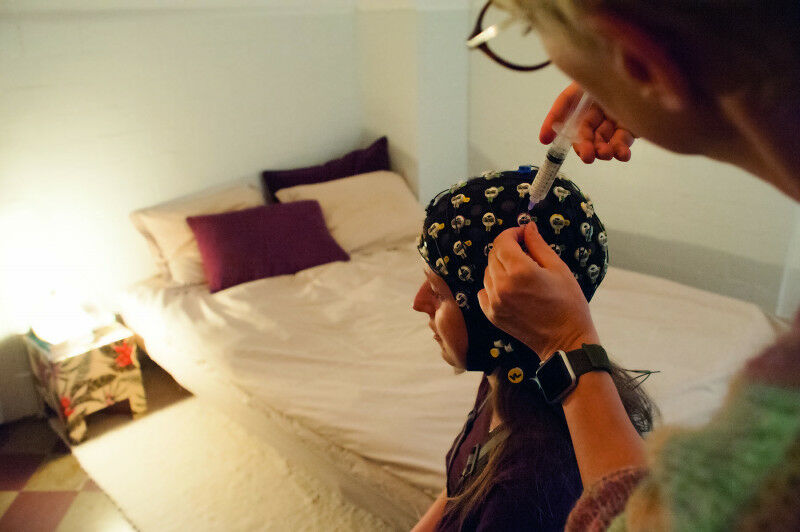
 To measure brain waves, from which the researchers can derive the personal sleep profile, a test person is fitted with electrodes at home so that she can sleep in familiar surroundings.
To measure brain waves, from which the researchers can derive the personal sleep profile, a test person is fitted with electrodes at home so that she can sleep in familiar surroundings. Courtesy of Social Neuro Lab, University of Bern - Each person has their own sleep profile, which can be identified by the electrical brain activity during sleep. Now, researchers from the University of Bern show that brain waves during periods of deep sleep in a specific area of the brain can be used to determine how cooperative and prosocial a person is in their everyday life. People donate to charities, volunteer, and participate in cooperative projects. They invest in the well-being of others and the common good without always benefiting themselves. Cooperative and prosocial behavior plays a crucial role in a well-functioning society, but not all'individuals exhibit the same level of cooperativeness and altruism. How prosocial someone is can also be discerned during deep sleep, as demonstrated by researchers led by Daria Knoch, Professor of Social Neuroscience at the University of Bern: "The more so-called slow waves a person exhibits in deep sleep in a brain area called right temporo-parietal junction (TPJ), the more prosocial they act.
TO READ THIS ARTICLE, CREATE YOUR ACCOUNT
And extend your reading, free of charge and with no commitment.
Your Benefits
- Access to all content
- Receive newsmails for news and jobs
- Post ads