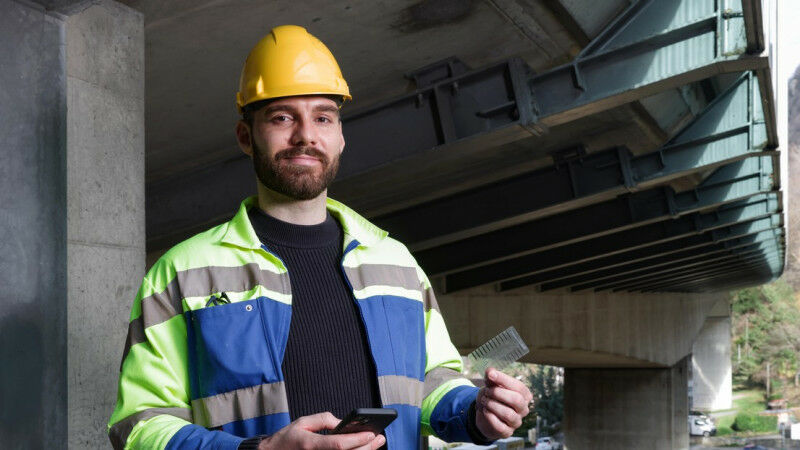
 Hugo Nick in front of the Chillon viaduct in the canton of Vaud.
Hugo Nick in front of the Chillon viaduct in the canton of Vaud. EPFL/Alain Herzog - CC-BY-SA 4. An EPFL Master's student in civil engineering has evaluated the effectiveness of new computer-based methods for inspecting potentially dangerous cracks in concrete. A crucial aspect of civil engineering is determining the exact condition of cracks in concrete bridges, dams, tunnels and other types of infrastructure. Advanced technology, and especially artificial intelligence, can make the task easier for inspection engineers - but how can it be deployed most effectively? This question is what Hugo Nick set out to answer with his Master's project, carried out in association with the Structural Concrete Laboratory (IBETON) at EPFL's School of Architecture, Civil and Environmental Engineering (ENAC). "It's normal for cracks to appear in reinforced concrete, and these cracks can open or close depending on the type of load they're subject to," says Enrique Corres Sojo, a doctoral assistant at IBETON and one of Nick's project supervisors. "The tricky part is knowing whether a crack is potentially dangerous and if there are any associated risks." Today, engineers inspect structures using the naked eye and simple measurement tools like small rulers.
TO READ THIS ARTICLE, CREATE YOUR ACCOUNT
And extend your reading, free of charge and with no commitment.
Your Benefits
- Access to all content
- Receive newsmails for news and jobs
- Post ads