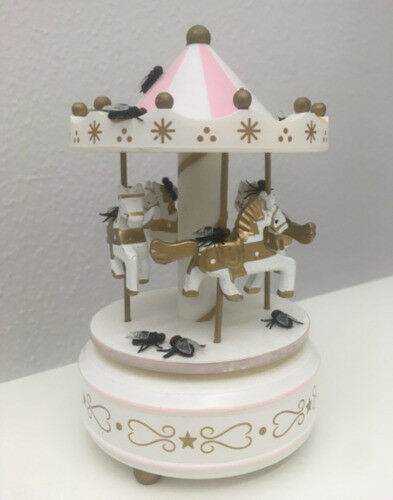
In a recent study, scientists at Leipzig University have demonstrated the potential play behavior of flies for the first time. They found that fruit flies (Drosophila melanogaster) voluntarily and repeatedly visit a carousel. "Until now, play behavior has mainly been described in vertebrates," says Wolf Hütteroth, who led the study at Leipzig University’s Institute of Biology and recently moved from Leipzig to Northumbria University in Newcastle, England, as an Associate Professor. He and his colleagues have just published their findings in the journal Current Biology.
The playful behavior of voluntary passive movement of the flies described by the researchers, such as swinging, bobbing, sliding or turning, has now been demonstrated in insects for the first time. "This could help us to find out how we humans also develop efficient self-awareness of our bodies," explains Hütteroth, whose study was funded by the German Research Foundation (DFG).
In collaboration with Northumbria University, the interaction of the flies with the carousel was analyzed in more detail: While many flies avoided the carousel, others visited the carousel repeatedly and for longer periods of time. When two carousels rotated alternately, the flies even actively followed the stimulation.
The scientists placed a total of 190 individual flies in a carousel arena, a watch glass dome about one centimeter high, and then filmed them for 3 to 14 days. The positions of the flies in the films were then automatically recognized and tracked using special software. Only a fraction of the generated data went into , "With several carousels, we generated and analyzed a total of around seven years of film data," reports Dr. Tilman Triphan, the first author of the study. This effort was necessary because the researchers - unlike in most behavioral experiments on flies - were dependent on the voluntary behavior of the insects. There was not enough space under the watch glass dome to fly onto the carousel. "However, we differentiated between whether the flies deliberately ran onto the carousel or jumped onto it in an uncoordinated manner. This allowed us to show that unplanned visits to the carousel were rather atypical for the playing flies," explains co-author Dr. Clara H. Ferreira, assistant professor at Northumbria University.
According to Hütteroth, the research results now allow an in-depth investigation of the underlying genetic, neuronal and biochemical factors that influence the play behavior of fruit flies and what advantages this generally has for playful creatures.
Original publication in Current Biology:
"Play-like behavior exhibited by the vinegar fly Drosophila melanogaster" , DOI: 10.1016/j.cub.2025.01.025