




Environment - Mar 26
Changing vegetation in thawing permafrost increases emissions of greenhouse gases
Changing vegetation in thawing permafrost increases emissions of greenhouse gases
Environment - Mar 26
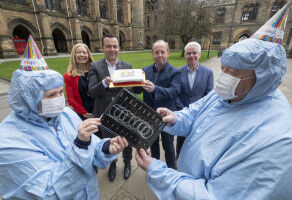
University of Manchester hits major sustainability milestone, with Main Campus becoming 100% 'Zero Landfill'
University of Manchester hits major sustainability milestone, with Main Campus becoming 100% 'Zero Landfill'
Social Sciences - Mar 26
"It would be naive to believe that a social media ban will solve all problems"
"It would be naive to believe that a social media ban will solve all problems"


Health - Mar 26
Earlier detection, better outcomes: Irish researchers target rising bowel cancer rates with new blood test
Earlier detection, better outcomes: Irish researchers target rising bowel cancer rates with new blood test

Environment - Mar 26
UK must improve energy efficiency to end 50 years of policy failure and prevent future energy crises, study argues
UK must improve energy efficiency to end 50 years of policy failure and prevent future energy crises, study argues
Mathematics - Mar 26
From Materials to Medical Imaging, Fonseca's Work Shapes the Future of Innovation
From Materials to Medical Imaging, Fonseca's Work Shapes the Future of Innovation



news
Chemistry
Results 2801 - 2820 of 3958.
Chemistry - 06.01.2016
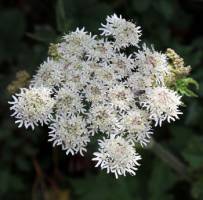
Sussex research exposes secret cocktail of toxic pesticides in hedgerows and wildflowers Scientists at the University of Sussex have discovered that bees are exposed to a chemical cocktail when feeding from wildflowers growing next to neonicotinoid-treated crops in UK farmland. These chemical cocktails could make the impact of neonicotinoids up to 1,000 times more potent than previously realised.
Chemistry - Physics - 06.01.2016
Detection of molecules important for healthcare could soon be 1000 times faster
Scientists should soon be able to capture biological molecules a thousand times faster, allowing better detection of important health issues. DNA mutations, which can lead to cancers and other problems, can be difficult to detect in biological samples as they are relatively rare. In order to analyse all DNA molecules for signs of mutation, it is important to gather as many as possible, but this is often time-consuming.
Innovation - Chemistry - 06.01.2016

Researchers at ETH Zurich have manufactured transparent electrodes for use in touchscreens using a novel nanoprinting process. The new electrodes are some of the most transparent and conductive that have ever been developed. From smartphones to the operating interfaces of ticket machines and cash dispensers, every touchscreen we use requires transparent electrodes: The devices' glass surface is coated with a barely visible pattern made of conductive material.
Chemistry - Physics - 28.12.2015

A wide variety of fruits and vegetables contain oxalate. But humans and most other animals lack the ability to metabolize this molecule - that is, to break it down while digesting it. And so for some people, a buildup of oxalate is associated with kidney stones, arthritis, and even kidney failure. At the same time, some plants, fungi, and bacteria are able to break down oxalate.
Health - Chemistry - 21.12.2015
Discovery finds possible new route to malaria vaccine
Oxford University researchers across the globe are working to beat Malaria. Now, a team of Oxford scientists in the UK and Kenya, working with colleagues in three Swiss institutes, have found two people who could reveal a new approach to targeting the malaria parasite. Malaria still claims over 400,000 lives every year, mostly due to infection by a single species of malaria parasite called Plasmodium falciparum .
Chemistry - Life Sciences - 21.12.2015
Chemists Develop Bright, Fluorescent Bottlebrush Polymer Probe for Cell Detection
The brighter probes will allow scientists to detect very low levels of protein expressed in cells. Fluorescent probes, glowing tags that can be attached to a variety of biomolecules, are ubiquitous in the study of biological systems. Chemists at Carnegie Mellon University have developed a new polymer-based probe, inspired by a bottlebrush, that can hold thousands of fluorescent molecules, making it 10 times brighter than current technology.
Physics - Chemistry - 21.12.2015
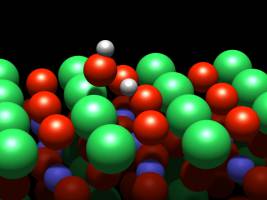
Pole dancing water molecules - Researchers at the TU Wien have seen this remarkable phenomenon on the surface of an important technological material. Perovskites are materials used in batteries, fuel cells, and electronic components, and occur in nature as minerals. Despite their important role in technology, little is known about the reactivity of their surfaces.
Life Sciences - Chemistry - 20.12.2015
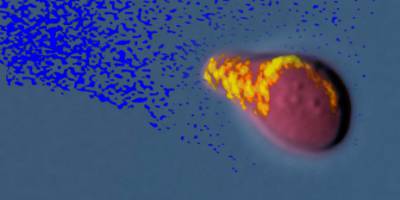
Cells have an infallible sense of smell that tells them which direction to grow in to move closer to the source of a scent. ETH researchers have now learned how this sense of smell works. A frequent problem faced by cells is that they are surrounded by a promising cloud of scent and must determine the direction of its source.
Chemistry - Administration - 17.12.2015
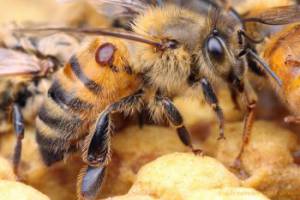
Scientists determine how to control parasite without harming bees Scientists at the University of Sussex have determined the best way of controlling Varroa mites - one of the biggest threats facing honey bees - without harming the bees themselves. A team from the Laboratory of Apiculture and Social Insects (LASI) has determined the best dose and method for treating hives with oxalic acid, a naturally occurring chemical already being used by beekeepers to control Varroa.
Health - Chemistry - 16.12.2015
Plants use a molecular clock to predict when they’ll be infected
Plants are unable to maintain a high level of resistance to infection 24/7 - Fungal infection appears more likely to occur at dawn - Plants use their molecular clock to raise resistance levels before dawn in anticipation of infection - Molecular clock and immune system found to be connected by a single protein Plants are able to predict when infections are more likely to occur and regulate their immune response accordingly, new research has found.
Life Sciences - Chemistry - 14.12.2015
Repurposed genes responsible for unique fins of skates and rays, study finds
The evolution of the striking, wing-like pectoral fins of skates and rays relied on repurposed genes, according to new research by scientists from the University of Chicago. Studying embryonic skates, they discovered that the rear portion of the fin is built by typical limb-development genes; but the front portion develops through a different set of genes that are usually found in the shoulder areas of other species.
Life Sciences - Chemistry - 14.12.2015
First serotonin neurons made from human stem cells
Su-Chun Zhang , a pioneer in developing neurons from stem cells at the University of Wisconsin-Madison, has created a specialized nerve cell that makes serotonin, a signaling chemical with a broad role in the brain. Serotonin affects emotions, sleep, anxiety, depression, appetite, pulse and breathing.
Physics - Chemistry - 11.12.2015

Lancaster is working with the University of Oxford on a £5.2m project which aims to design and develop the world's most efficient thermoelectric material. QuEEN (Quantum Effects in Electronic Nanodevices) funded by the EPSRC involves teams from the Physics Department at Lancaster and the Departments of Materials and Chemistry at Oxford.
Health - Chemistry - 10.12.2015
New test may improve diagnosis, treatment of gastrointestinal cancers
University of Chicago researchers have developed a method to diagnose pancreatic cancer earlier in patients. By collecting samples from the portal vein—which carries blood from the gastrointestinal tract, including from the pancreas, to the liver—physicians can learn far more about a patient's pancreatic cancer than by relying on peripheral blood from a more easily accessed vein in the arm.
Health - Chemistry - 10.12.2015
Alzheimer’s study probes chemistry of the brain
State-of-the-art simulations will investigate the cause and potential prevention of plaque build-up in the brain Experts at the University are using state-of-the-art computer simulations to study the fundamental chemistry underpinning the development of Alzheimer's disease. Dr Jamie Platts, from the School of Chemistry , has been awarded a major research grant to investigate the build-up of 'sticky' plaques in the brain, which are believed to contribute to the degradation of nerve cells in the brain and the subsequent symptoms of Alzheimer's disease.
Administration - Chemistry - 10.12.2015
Funding for Successful Collaborative Research Center at Freie Universität Berlin Extended Again
German Research Foundation Grants CRC 765 "Multivalency as Chemical Organization and Action Principle: New Architectures, Functions and Applications" Additional Funding through 2019 / New Partner: Robert Koch Institute The German Research Foundation (DFG) has extended the funding for a Collaborative Research Center (CRC) based at Freie Universität Berlin, "Multivalency as Chemical Organization and Action Principle: New Architectures, Functions and Applications.
Health - Chemistry - 10.12.2015
$1 million for earlier detection of lung cancer
The University of Queensland and The Prince Charles Hospital will lead a new centre dedicated to the early detection of lung cancer thanks to $1 million in funding from the Australian Cancer Research Foundation (ACRF). The establishment of the ACRF Centre for Lung Cancer Early Detection was announced at the ACRF awards dinner in Sydney last night.
Chemistry - Physics - 07.12.2015
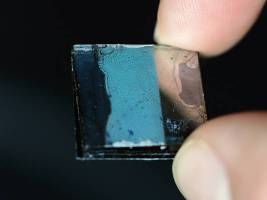
Using a new procedure researchers at the Technical University of Munich (TUM) and the Ludwig Maximillians University of Munich (LMU) can now produce extremely thin and robust, yet highly porous semiconductor layers. A very promising material - for small, light-weight, flexible solar cells, for example, or electrodes improving the performance of rechargeable batteries.
Life Sciences - Chemistry - 04.12.2015
Cut, File, Shred - A Type of Multi-tool Pocketknife Processes Ribosomal RNA
Researchers from the Heidelberg University Biochemistry Center (BZH) have discovered a complex of four proteins that, much like a multi-tool pocketknife, serves as a knife, a file and a pair of scissors in the manufacture of ribosomes. The complex helps eliminate the residual ribonucleic acid (RNA) that are produced during the manufacturing of the ribsome and must be removed to complete the process.
Life Sciences - Chemistry - 03.12.2015
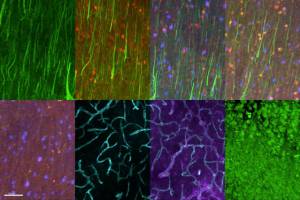
MIT chemical engineers and neuroscientists have developed a new way to classify neurons by labeling and imaging the proteins found in each cell. This type of imaging offers clues to each neuron's function and should help in mapping the human brain, the researchers say. "Each cell uses a unique combination of proteins.


Environment - Mar 26
Changing vegetation in thawing permafrost increases emissions of greenhouse gases
Changing vegetation in thawing permafrost increases emissions of greenhouse gases
Environment - Mar 26
University of Manchester hits major sustainability milestone, with Main Campus becoming 100% 'Zero Landfill'
University of Manchester hits major sustainability milestone, with Main Campus becoming 100% 'Zero Landfill'
Social Sciences - Mar 26
"It would be naive to believe that a social media ban will solve all problems"
"It would be naive to believe that a social media ban will solve all problems"
Health - Mar 26
Earlier detection, better outcomes: Irish researchers target rising bowel cancer rates with new blood test
Earlier detection, better outcomes: Irish researchers target rising bowel cancer rates with new blood test
Environment - Mar 26
UK must improve energy efficiency to end 50 years of policy failure and prevent future energy crises, study argues
UK must improve energy efficiency to end 50 years of policy failure and prevent future energy crises, study argues
Mathematics - Mar 26
From Materials to Medical Imaging, Fonseca's Work Shapes the Future of Innovation
From Materials to Medical Imaging, Fonseca's Work Shapes the Future of Innovation