


Life Sciences - Mar 27
Understanding the Brain - TU Ilmenau's EU EMBRACE Project Nominated for European Excellence Award
Understanding the Brain - TU Ilmenau's EU EMBRACE Project Nominated for European Excellence Award
Social Sciences - Mar 27
A manual addresses, for the first time in Spain, child and adolescent sexual exploitation
A manual addresses, for the first time in Spain, child and adolescent sexual exploitation

Environment - Mar 26
Changing vegetation in thawing permafrost increases emissions of greenhouse gases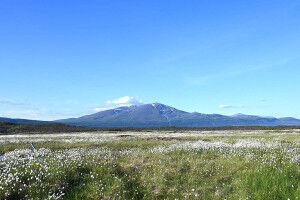
Changing vegetation in thawing permafrost increases emissions of greenhouse gases
Environment - Mar 26
University of Manchester hits major sustainability milestone, with Main Campus becoming 100% 'Zero Landfill'
University of Manchester hits major sustainability milestone, with Main Campus becoming 100% 'Zero Landfill'
Social Sciences - Mar 26
"It would be naive to believe that a social media ban will solve all problems"
"It would be naive to believe that a social media ban will solve all problems"


Health - Mar 26
Earlier detection, better outcomes: Irish researchers target rising bowel cancer rates with new blood test
Earlier detection, better outcomes: Irish researchers target rising bowel cancer rates with new blood test
Environment - Mar 26
UK must improve energy efficiency to end 50 years of policy failure and prevent future energy crises, study argues
UK must improve energy efficiency to end 50 years of policy failure and prevent future energy crises, study argues
Mathematics - Mar 26
From Materials to Medical Imaging, Fonseca's Work Shapes the Future of Innovation
From Materials to Medical Imaging, Fonseca's Work Shapes the Future of Innovation


news
Chemistry
Results 2861 - 2880 of 3958.
Chemistry - Life Sciences - 01.10.2015
The Carbohydrate Wind Tunnel
"Nature" Reports on Powerful Carbohydrate Analytics for Sequencing and Quality Control / WITH PRESS PHOTOS A team of researchers from Berlin succeeded in an effort to fundamentally improve carbohydrate analysis. With the new method, developed by Prof. Kevin Pagel (Freie Universität Berlin and Fritz Haber Institute of the Max Planck Society) and Prof. Peter Seeberger (Max Planck Institute of Colloids and Interfaces and Freie Universität Berlin), complex glycans, building blocks of life such as DNA and proteins, can now be sequenced.
Environment - Chemistry - 30.09.2015

Cloaking urban areas and wildfire zones, tiny smoke particles suspended in the atmosphere have a sizeable effect on our climate. response to drought. "The new measurements resolve carbon particles that are of several types, each with its own effect on climate," said project leader Manvendra Dubey of Los Alamos National Laboratory.
Chemistry - Physics - 30.09.2015
Hydrogen for all seasons
LMU chemists have developed novel porous materials called "covalent organic frameworks", which provide a basis for the design of polymeric photocatalysts with tunable physical, chemical and electronic properties. Chemical systems that are capable of generating hydrogen gas by light-activated scission of water molecules (often termed artificial photosynthesis) represent a promising technology for the efficient storage of solar energy.
Health - Chemistry - 30.09.2015
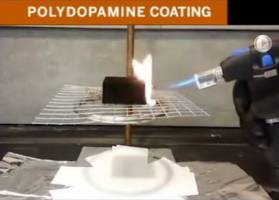
AUSTIN, Texas - Inspired by a naturally occurring material found in marine mussels, researchers at The University of Texas at Austin have created a new flame retardant to replace commercial additives that are often toxic and can accumulate over time in the environment and living animals, including humans.
Chemistry - Environment - 30.09.2015
A Balanced Diet is Good for Corals Too, Study Finds
A new study found that a nutrient-rich, balanced diet is beneficial to corals during stressful thermal events. The research led by scientists at the University of Miami (UM) Rosenstiel School of Marine and Atmospheric Science and the Centre Scientifique de Monaco concluded that the particular nutrient balance in seawater is what matters most.
Life Sciences - Chemistry - 28.09.2015
Scientists determine colour of ancient mammals
What colour were the animals that roamed the Earth 50 million years ago? For the first time, the original colour of a fossil mammal has been described by scientists from the University of Bristol, UK and Virginia Polytechnic Institute and State University, US. The researchers combined morphological, experimental and chemical techniques to determine the colour of two species of bat, which lived in the Eocene Epoch, 56-33.9 million years ago.
Environment - Chemistry - 28.09.2015
Ice samples from Greenland and Russia provide clues to past and future climate change, experts discover
Scientists at the University of Birmingham have discovered evidence of carbonaceous aerosols - organic dust - transported from Asia and deposited in the Arctic over the last 450 years, according to research published today (28th September) Scientific Reports. They have also found that increased levels of dust were being deposited during warmer periods when the Arctic Oscillation - changes in the prevailing wind direction centred on the Atlantic - was at its strongest.
Health - Chemistry - 28.09.2015
From Yale, a new sunblock that doesn’t penetrate the skin
Researchers at Yale have developed a sunscreen that doesn't penetrate the skin, eliminating serious health concerns associated with commercial sunscreens. Most commercial sunblocks are good at preventing sunburn, but they can go below the skin's surface and enter the bloodstream. As a result, they pose possible hormonal side effects and could even be promoting the kind of skin cancers they're designed to prevent.
Life Sciences - Chemistry - 28.09.2015
Tweaking proteins with ’Tub-tag’
LMU researchers, together with colleagues based in Berlin, have developed a rapid and efficient technique for targeted chemoenzymatic functionalization of proteins. The new method has a wide range of potential therapeutic applications. Selective intermolecular recognition is at the heart of all biological processes.
Chemistry - Life Sciences - 25.09.2015
A chemistry test for public safety
An estimated 80,000 chemical substances currently find their way into our environment through industrial and agricultural waste, as well as through food additives, pesticides, pharmaceuticals and personal care products. But even as companies continue to produce new chemical compounds at a rapid clip, toxicologists and state and federal regulators agree that conventional approaches to testing chemical safety have significant limitations.
Chemistry - Health - 25.09.2015
Great Barrier Reef turtles exposed to thousands of chemicals
New Queensland research is indicating that green turtles living near urban and farming areas are absorbing possibly thousands of chemicals. University of Queensland researcher Associate Professor Caroline Gaus said many of the chemicals were associated with industry and agriculture. "There used to be a theory that the ocean was so huge it would dilute contaminants to such an extent that it remained a relatively healthy environment for marine creatures," Dr Gaus said.
Chemistry - Health - 23.09.2015
The world’s nitrogen fixation, explained
Yale University scientists may have cracked a part of the chemical code for one of the most basic, yet mysterious, processes in the natural world - nature's ability to transform nitrogen from the air into usable nitrogen compounds. The process is called nitrogen fixation, and it occurs in microorganisms on the roots of plants.
Chemistry - Physics - 23.09.2015
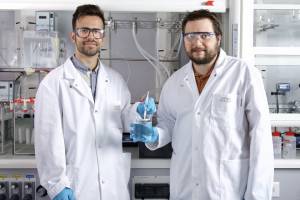
Researchers have developed a coating technique in the laboratory conditions that could raise the efficiency of fuel cells.
Chemistry - Life Sciences - 22.09.2015
’Flipped’ science class helps women, those with lower GPA, study shows
Physical chemistry students given most course content outside of the classroom scored 12% higher on exams than counterparts in more traditional classes where students listened to lectures, a new study by researchers at the Yale Center for Teaching and Learning and the University of Massachusetts-Amherst (U-Mass) shows.
Physics - Chemistry - 22.09.2015
Laser-based molecular fingerprinting
A team of researchers based at LMU and the Max Planck Institute for Quantum Optics has developed an infrared laser that can be used to identify and quantify molecules in complex mixtures with high specificity and sensitivity. The new laser system developed at LMU emits ultrashort pulses of infrared light at a repetition rate of 100 million per second.
Physics - Chemistry - 21.09.2015
UCLA physicists determine the three-dimensional positions of individual atoms for the first time
Mary Scott and Jianwei (John) Miao/UCLA The scientists were able to plot the exact coordinates of nine layers of atoms with a precision of 19 trillionths of a meter. Atoms are the building blocks of all matter on Earth, and the patterns in which they are arranged dictate how strong, conductive or flexible a material will be.
Health - Chemistry - 21.09.2015
Surprise finding suggests diabetes drug could release rather than prevent blood sugar
Graham Ladds, lecturer in pharmacology, discusses the controversy around a group of drugs used to treat Type 2 diabetes. We should continue to evaluate and investigate this treatment as new information about its interaction with the body emerges Graham Ladds Nearly all medications have some sort of side effects , some more unpleasant and dangerous than others.
Health - Chemistry - 16.09.2015

Yale University chemists have created a new process for synthesizing an organic, nitrogen-based compound that inhibits HIV. The process represents a fundamentally different approach to synthesizing alkaloids, which are naturally occurring compounds that contain nitrogen. The new approach uses a set of starting materials that do not require the usual tempering of nitrogen's reactive tendencies.
Chemistry - Physics - 16.09.2015
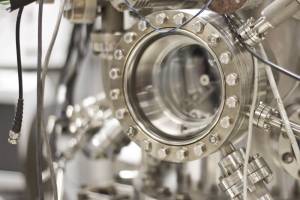
Scientists at the Vienna University of Technology (TU Wien) have figured out how a platinum catalyst works. Its remarkable properties are not just due to the platinum, the iron-oxide substrate beneath also plays a role. Left: Tiny platinum nanoparticles on an iron oxide surface. center: H2 gas leads to trenches in the surface.
Chemistry - Environment - 16.09.2015
Size does matter for sexually deceptive orchids »
Researchers at The Australian National University (ANU) have found the size and shape of orchids play a big part in their act of sexual deception to get male wasps to pollinate their flowers. Until now it had been thought many orchids need only produce floral scent, or chemicals that mimic female insect sex pheromones, to deceive male insects into pollinating their flowers.


Life Sciences - Mar 27
Understanding the Brain - TU Ilmenau's EU EMBRACE Project Nominated for European Excellence Award
Understanding the Brain - TU Ilmenau's EU EMBRACE Project Nominated for European Excellence Award
Social Sciences - Mar 27
A manual addresses, for the first time in Spain, child and adolescent sexual exploitation
A manual addresses, for the first time in Spain, child and adolescent sexual exploitation
Environment - Mar 26
Changing vegetation in thawing permafrost increases emissions of greenhouse gases
Changing vegetation in thawing permafrost increases emissions of greenhouse gases
Environment - Mar 26
University of Manchester hits major sustainability milestone, with Main Campus becoming 100% 'Zero Landfill'
University of Manchester hits major sustainability milestone, with Main Campus becoming 100% 'Zero Landfill'
Social Sciences - Mar 26
"It would be naive to believe that a social media ban will solve all problems"
"It would be naive to believe that a social media ban will solve all problems"
Health - Mar 26
Earlier detection, better outcomes: Irish researchers target rising bowel cancer rates with new blood test
Earlier detection, better outcomes: Irish researchers target rising bowel cancer rates with new blood test
Environment - Mar 26
UK must improve energy efficiency to end 50 years of policy failure and prevent future energy crises, study argues
UK must improve energy efficiency to end 50 years of policy failure and prevent future energy crises, study argues
Mathematics - Mar 26
From Materials to Medical Imaging, Fonseca's Work Shapes the Future of Innovation
From Materials to Medical Imaging, Fonseca's Work Shapes the Future of Innovation