



Life Sciences - Today
Understanding the Brain - TU Ilmenau's EU EMBRACE Project Nominated for European Excellence Award
Understanding the Brain - TU Ilmenau's EU EMBRACE Project Nominated for European Excellence Award
Social Sciences - Today
A manual addresses, for the first time in Spain, child and adolescent sexual exploitation
A manual addresses, for the first time in Spain, child and adolescent sexual exploitation


Environment - Mar 26
Changing vegetation in thawing permafrost increases emissions of greenhouse gases
Changing vegetation in thawing permafrost increases emissions of greenhouse gases
Environment - Mar 26
University of Manchester hits major sustainability milestone, with Main Campus becoming 100% 'Zero Landfill'
University of Manchester hits major sustainability milestone, with Main Campus becoming 100% 'Zero Landfill'
Social Sciences - Mar 26
"It would be naive to believe that a social media ban will solve all problems"
"It would be naive to believe that a social media ban will solve all problems"


Health - Mar 26
Earlier detection, better outcomes: Irish researchers target rising bowel cancer rates with new blood test
Earlier detection, better outcomes: Irish researchers target rising bowel cancer rates with new blood test

Environment - Mar 26
UK must improve energy efficiency to end 50 years of policy failure and prevent future energy crises, study argues
UK must improve energy efficiency to end 50 years of policy failure and prevent future energy crises, study argues
Mathematics - Mar 26
From Materials to Medical Imaging, Fonseca's Work Shapes the Future of Innovation
From Materials to Medical Imaging, Fonseca's Work Shapes the Future of Innovation


news
Chemistry
Results 3461 - 3480 of 3958.
Chemistry - 19.09.2012

Melvyn shows how small molecules could help crack a big problem Chemistry undergraduate Melvyn Ansell's JRA project looked at small molecules to help solve one of the world's biggest problems - the environmental impact of CO2 emissions. The chemistry department at the University of Sussex is currently conducting research into clean fuels technology, looking at ways that greenhouse gases can be manipulated (eg conversion of CO2to other molecules) to mitigate their effect on global warming.
Chemistry - Mathematics - 19.09.2012
Researchers to Develop Software to Improve Discovery of Low-Cost, Sustainable Energy Materials
AUSTIN, Texas — Researchers at The University of Texas at Austin have received a $6.2 million grant over a five-year period to develop computer software to design and discover materials for low-cost energy applications. Potential uses include economical battery materials to capture solar energy and materials that convert water to hydrogen using sunlight.
Chemistry - Physics - 19.09.2012
Researchers develop printable lasers
A way of printing lasers using everyday inkjet technology has been created by scientists. The development has a wide range of possible applications, ranging from biomedical testing to laser arrays for displays.
Health - Chemistry - 14.09.2012
Getting (drugs) under your skin
Using ultrasound waves, MIT engineers have found a way to enhance the permeability of skin to drugs, making transdermal drug delivery more efficient. This technology could pave the way for noninvasive drug delivery or needle-free vaccinations, according to the researchers. "This could be used for topical drugs such as steroids - cortisol, for example - systemic drugs and proteins such as insulin, as well as antigens for vaccination, among many other things," says Carl Schoellhammer, an MIT graduate student in chemical engineering and one of the lead authors of a recent paper on the new system.
Physics - Chemistry - 10.09.2012

ANN ARBOR, Mich.-A strip of glass covered in hairy nanoparticles can cheaply and conveniently measure mercury, which attacks the nervous system, and other toxic metals in fluids. Researchers at the Swiss Federal Institute of Technology (EPFL), Northwestern University and the University of Michigan found that their new method can measure methyl mercury, the most common form of mercury pollution, at unprecedentedly small concentrations.
Environment - Chemistry - 10.09.2012

Bucking the idea that environmentalism hurts economic performance, a new UCLA-led study has found that companies that voluntarily adopt international "green" practices and standards have employees who are 16 percent more productive than the average. Professor Magali Delmas, an environmental economist at UCLA's Institute of the Environment and Sustainability and the UCLA Anderson School of Management , and Sanja Pekovic from France's University Paris-Dauphine are the first to study how a firm's environmental commitment affects its productivity.
Life Sciences - Chemistry - 05.09.2012

The sorcerer's apprentice started a water-carrying system, but couldn't stop it, and soon he was up to his neck in water, and trouble. Living cells have a better design: When they activate a gene, they have a system in reserve to turn it off. The cell does not want to waste energy making proteins it no longer needs.
Physics - Chemistry - 04.09.2012

Materials called transition metal oxides have physicists intrigued by their potentially useful properties - from magnetoresistance (the reason a hard drive can write memory) to superconductivity. By combining two sophisticated experimental tools - oxide molecular beam expitaxy and angle-resolved photoemission spectroscopy - researchers have gained the first insights into quantum interactions in transition metal oxide superlattices, which are artificial stacked layers of alternating materials, each just a few atoms thick.
Environment - Chemistry - 04.09.2012
Organic farms not necessarily better for environment
Organic farming is generally good for wildlife but does not necessarily have lower overall environmental impacts than conventional farming, a new analysis led by Oxford University scientists has shown. The researchers analysed data from 71 studies published in peer-reviewed journals that compared organic and conventional farms in Europe.
Physics - Chemistry - 03.09.2012
The Quantum World Only Partially Melts
At the Vienna University of Technology, the transition of quantum systems towards thermal equilibrium has been investigated. Scientists have detected an astonishingly stable intermediate state between order and disorder. The results have now been published in the journal "Science". Every day we observe systems thermalizing: Ice cubes in a pot of hot water will melt and will never remain stable.
Chemistry - Physics - 03.09.2012
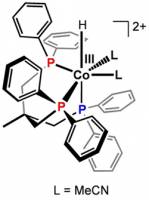
Scientists and engineers around the world are working to find a way to power the planet using solar-powered fuel cells. Such green systems would split water during daylight hours, generating hydrogen (H2) that could then be stored and used later to produce water and electricity. But robust catalysts are needed to drive the water-splitting reaction.
Chemistry - 02.09.2012
Little evidence of health benefits from organic foods, Stanford study finds
Really Simple Syndication (RSS) is an XML-based format which can be accessed with "news reader" applications, embedded in blogs, and used in other ways. Our RSS feeds currently use RSS 2. Look for this icon: Click on the orange feed icon on any Stanford web page to access the RSS feed. How to access RSS feeds There are a number of ways to access RSS feeds.
Life Sciences - Chemistry - 28.08.2012
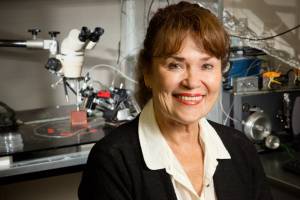
CHAMPAIGN, lll. The rhythm of life is driven by the cycles of day and night, and most organisms carry in their cells a common, (roughly) 24-hour beat. In animals, this rhythm emerges from a tiny brain structure called the suprachiasmatic nucleus (SCN) in the hypothalamus. Take it out of the brain and keep it alive in a lab dish and this "brain clock" will keep on ticking, ramping up or gearing down production of certain proteins at specific times of the day, day after day.
Life Sciences - Chemistry - 27.08.2012
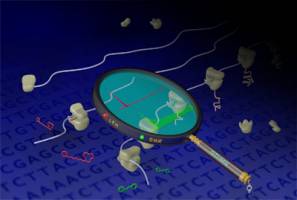
Although scientists sequenced the entire human genome more than 10 years ago, much work remains to understand what proteins all those genes code for. Now, a study published online Aug. 27 in the Proceedings of the National Academy of Sciences describes a new approach that allows researchers to decode the genome by understanding where genes begin to encode for polypeptides, long chains of amino acids that make up proteins.
Physics - Chemistry - 26.08.2012
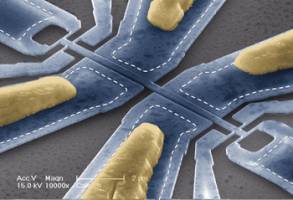
A team led by scientists at the California Institute of Technology (Caltech) has made the first-ever mechanical device that can measure the mass of individual molecules one at a time. This new technology, the researchers say, will eventually help doctors diagnose diseases, enable biologists to study viruses and probe the molecular machinery of cells, and even allow scientists to better measure nanoparticles and air pollution.
Chemistry - 23.08.2012

One of the first stages of developing the new renewable energy source under an industrially relevant environment. Until now, no inexpensive molecular catalyst was known to evolve H2 efficiently in water and under aerobic conditions.
Physics - Chemistry - 21.08.2012

In the world of proteins, form defines function. Based on interactions between their constituent amino acids, proteins form specific conformations, folding and twisting into distinct, chemically directed shapes. The resulting structure dictates the proteins' actions; thus accurate modeling of structure is vital to understanding functionality.
Chemistry - Life Sciences - 20.08.2012

That green muck you see on a pond's surface is one step closer to becoming a solar-powered source of some of the stuff you use everyday. Scientists from the U.S. Department of Energy's Lawrence Berkeley National Laboratory (Berkeley Lab) and Stanford University have developed a way to send molecules and proteins across the cell wall of algae, a feat that opens the door for a new way to study and manipulate these tiny organisms.
Physics - Chemistry - 20.08.2012
Patterning defect-free nanocrystal films with nanometer resolution
New process developed at MIT could enable better LED displays, solar cells and biosensors - and foster basic physics research. Films made of semiconductor nanocrystals - tiny crystals measuring just a few billionths of a meter across - are seen as a promising new material for a wide range of applications.
Chemistry - Physics - 15.08.2012
Behaviors of the Tiniest Water Droplets
Three-dimensional representations of the prism (left) and cage (right) structures of the water hexamer, the smallest drop of water. The mesh contours represent the actual quantum-mechanical densities of the oxygen (red) and hydrogen (white) atoms. The small yellow spheres represent the hydrogen bonds between the six water molecules.


Life Sciences - Today
Understanding the Brain - TU Ilmenau's EU EMBRACE Project Nominated for European Excellence Award
Understanding the Brain - TU Ilmenau's EU EMBRACE Project Nominated for European Excellence Award
Social Sciences - Today
A manual addresses, for the first time in Spain, child and adolescent sexual exploitation
A manual addresses, for the first time in Spain, child and adolescent sexual exploitation
Environment - Mar 26
Changing vegetation in thawing permafrost increases emissions of greenhouse gases
Changing vegetation in thawing permafrost increases emissions of greenhouse gases
Environment - Mar 26
University of Manchester hits major sustainability milestone, with Main Campus becoming 100% 'Zero Landfill'
University of Manchester hits major sustainability milestone, with Main Campus becoming 100% 'Zero Landfill'
Social Sciences - Mar 26
"It would be naive to believe that a social media ban will solve all problems"
"It would be naive to believe that a social media ban will solve all problems"
Health - Mar 26
Earlier detection, better outcomes: Irish researchers target rising bowel cancer rates with new blood test
Earlier detection, better outcomes: Irish researchers target rising bowel cancer rates with new blood test
Environment - Mar 26
UK must improve energy efficiency to end 50 years of policy failure and prevent future energy crises, study argues
UK must improve energy efficiency to end 50 years of policy failure and prevent future energy crises, study argues
Mathematics - Mar 26
From Materials to Medical Imaging, Fonseca's Work Shapes the Future of Innovation
From Materials to Medical Imaging, Fonseca's Work Shapes the Future of Innovation