

Health - Mar 30
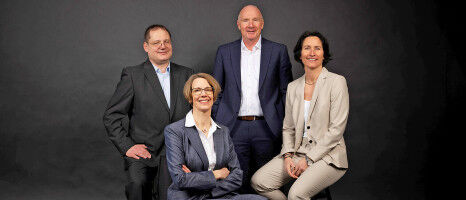
Minister Rianne Letschert visits Twente: education and science as drivers of the hospital of the future
Minister Rianne Letschert visits Twente: education and science as drivers of the hospital of the future
Social Sciences - Mar 30
New Research Project on African American Thought and the German Colonial Imagination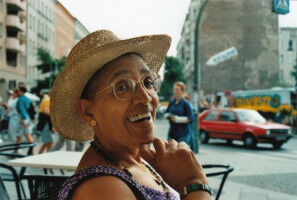
New Research Project on African American Thought and the German Colonial Imagination
Politics - Mar 30
Researcher Carolina Moreno calls for official science communication to counter disinformation in critical periods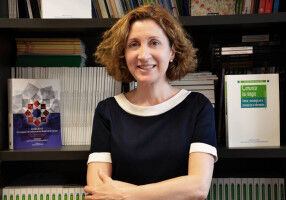
Researcher Carolina Moreno calls for official science communication to counter disinformation in critical periods

Health - Mar 30
Simple screening blood test could help identify undiagnosed heart failure in people living with diabetes
Simple screening blood test could help identify undiagnosed heart failure in people living with diabetes
Economics - Mar 30
University of Glasgow and Lloyds Banking Group announce groundbreaking agentic AI research programme
University of Glasgow and Lloyds Banking Group announce groundbreaking agentic AI research programme
Astronomy & Space - Mar 30
ANU lends its expertise in laser communications to support NASA's Artemis II crewed moon mission
ANU lends its expertise in laser communications to support NASA's Artemis II crewed moon mission
Life Sciences - Mar 27
Understanding the Brain - TU Ilmenau's EU EMBRACE Project Nominated for European Excellence Award
Understanding the Brain - TU Ilmenau's EU EMBRACE Project Nominated for European Excellence Award
Social Sciences - Mar 27
A manual addresses, for the first time in Spain, child and adolescent sexual exploitation
A manual addresses, for the first time in Spain, child and adolescent sexual exploitation
news
Eindhoven University of Technology
Results 1 - 20 of 97.
Health - Innovation - 14.01.2026
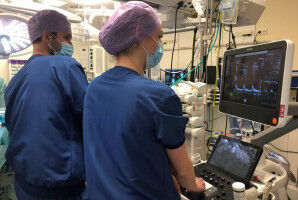
To monitor patients during and after surgery or in the intensive care unit, clinicians use catheters to keep a close eye on the circulatory system.
Health - Innovation - 08.01.2026
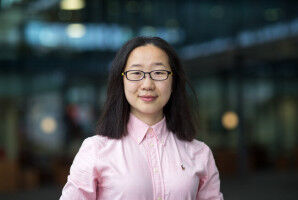
A new wearable technology could change how we monitor unborn babies at home. PhD researcher Yijing Zhang (Department of Electrical Engineering) has developed a comfortable, portable garment that allows pregnant women to measure their baby's heartbeat without the need for sticky, uncomfortable gel-based electrode sensors or direct skin contact.
Health - Computer Science - 27.11.2025

A new look at sleep monitoring Two researchers from Eindhoven University of Technology and their team develop new ways to monitor sleep disorders. Sebastiaan Overeem and Merel van Gilst don't necessarily want more accuracy when gathering sleep data from patients with sleeping disorders. Instead, they want more room for uncertainty and ways to show that.
Health - Computer Science - 12.11.2025

TU/e makes new medical AI model available worldwide Researchers at Eindhoven University of Technology (TU/e) have developed a medical AI model that helps doctors identify abnormalities in CT scans at an earlier stage, enabling faster diagnosis of cancer and other diseases. The model was trained on more than a quarter of a million CT scans.
Health - Pharmacology - 06.11.2025
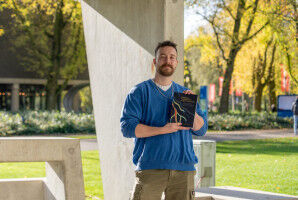
Hilhorst focuses on the cardiovascular domain, specifically on blood vessels. What if new medical treatments could be tested entirely on a computer-without involving a single human or animal? With his PhD research, Pjotr Hilhorst is taking the first step in that direction. The TU/e researcher develops computer models and uses data from "virtual patients" to improve medical diagnostics and predict the effectiveness of procedures and medications.
Physics - Innovation - 05.09.2025

Dutch fusion researchers Kevin Verhaegh (TU/e) and Bob Kool (Dutch research institute DIFFER and TU/e) headed the work with a collaboration between the UKAEA and European EUROfusion research teams. International experiments at the UK fusion machine MAST Upgrade in Culham, led by Dutch researchers, demonstrate how the innovative 'Super-X' design offers major advantages in handling the heat exhaust of fusion energy machines.
Materials Science - 27.08.2025
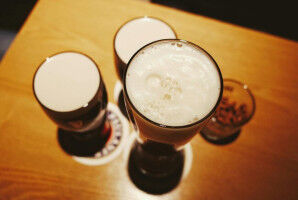
Researchers from TU/e and ETH Zurich have found the holy grail of brewing: the formula for stable beer foam, and it's down to protein structure. The researchers have studied the foam of six commercial beers: two triple-fermented Belgian beers, two Swiss lagers, one single-fermented Belgian beer, and one double-fermented Belgian beer.
Life Sciences - Health - 24.07.2025
Measuring brain blood flow during brain surgery
Thanks to a new technique, neurosurgeons at UMC Utrecht have been able to watch the blood flow in brain tissue live during surgery for the first time. Together with researchers from Eindhoven University of Technology, they have developed a method that allows them to detect the risk of a stroke during surgery sooner - and potentially prevent it.
Health - 01.07.2025
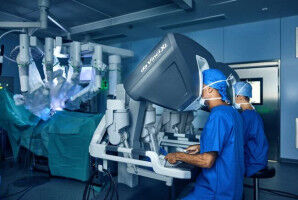
Researchers from UMC Utrecht and TU/e are working on an 'augmented reality' layer for surgeons who perform complex esophagectomy with a robot. In the IntraSurge project, researchers from TU/e are working together with physician-researchers from UMC Utrecht on a 'Google Maps' for the surgeon. By adding real-time information to the images of the surgical robot, new surgeons can be trained faster in robot-assisted surgery; they know where they are in the body, and they can see which steps remain in the operation.
Health - 05.06.2025

Researchers from Eindhoven are working with partners on the Hybrid Heart: a soft robotic heart that should eventually be able to attract the body's own cells to prevent rejection and complications. The research consortium has now published the first test results with an early prototype in Nature Communications.
Computer Science - 29.05.2025
More than ’just’ fun: Gaming for science
TU/e researcher explores the intersection of psychology, computer science and game design. Some unwind with a puzzle game on the couch, others dive into a shooter with friends. But as the newest research shows, games don't just entertain-they can offer insight and even sharpen the mind. Max Birk, an associate professor at Eindhoven University of Technology (TU/e), knows everything about it.
Health - Pharmacology - 16.05.2025

Sophie Adelaars researches sweat and saliva testing as an alternative to blood sampling. What if we could monitor patients in the future without taking blood samples every time? TU/e researcher Sophie Adelaars investigated a promising alternative: measuring biomarkers in sweat and saliva. This week, she defended her thesis at the Department of Electrical Engineering.
Physics - Life Sciences - 08.04.2025
Redefining fluid control in microfluidics with magnetic artificial cilia
Tongsheng Wang defended his PhD thesis at the Department of Mechanical Engineering on April 8th. What if the next big breakthrough in biotechnology was inspired not by machines-but by microscopic hairs? Deep within the intricate world of microfluidics, where tiny volumes of fluid are manipulated with extreme precision, a new player is emerging: programmable magnetic artificial cilia.
Health - 03.04.2025

Research by TU/e, the Catharina Ziekenhuis, and Philips shows that the image quality of ultrasound improves with two ultrasound transducers. Vera van Hal defended her PhD thesis cum laude at the Department of Biomedical Engineering on 1 April 2025. For the diagnosis of disorders and the monitoring of patients, healthcare providers need to be able to look not only at a patient but also inside the body of a patient.
Health - Pharmacology - 20.03.2025
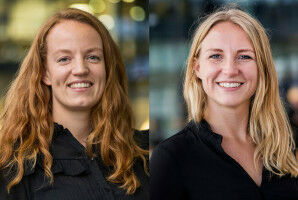
TU/e scientists collaborate on a method to protect insulin-producing cells. Scientists at Eindhoven University of Technology, among others, have developed a promising method to protect the cells in the pancreas that produce insulin - the beta cells - from damage related to type 2 diabetes. This method was recently published in the journal Nature Communications.
Physics - Innovation - 13.03.2025

Researchers have advanced a decades-old challenge in the field of organic semiconductors, opening new possibilities for the future of electronics. The researchers, led by the University of Cambridge and the Eindhoven University of Technology, have created an organic semiconductor that forces electrons to move in a spiral pattern, which could improve the efficiency of OLED displays in television and smartphone screens, or power next-generation computing technologies such as spintronics and quantum computing.
Life Sciences - Health - 24.01.2025

Lars Smolders developed an AI model to predict cognitive issues that a patient may experience after a brain tumor is removed. Patients with a glioma, a type of malignant brain tumor, can suffer from cognitive problems after surgery. However, the true effect of surgery on complex cognitive tasks is not known.
Chemistry - Life Sciences - 07.01.2025
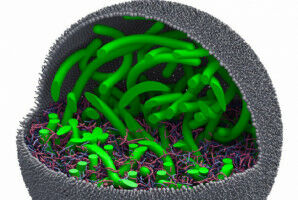
TU/e researchers have developed a way to make a cytoskeleton for artificial cells. The new research has been published in Nature Chemistry. Just like your body has a skeleton, every cell in your body has a skeleton - a cytoskeleton to be precise. This provides cells with mechanical resilience, as well as assisting with cell division.
Health - Innovation - 18.10.2024
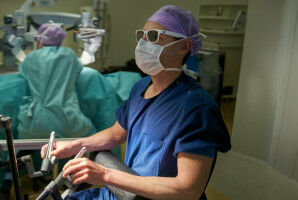
Thanks to a newly developed surgical robot, reconstructive surgery can be performed more safely and accurately in the future. This is also expected to lead to fewer complications and faster patient recovery. On October 18 , plastic surgeon Tom van Mulken of Maastricht UMC+ obtained his doctorate in research into this robot, which can significantly improve the precision and efficiency of microsurgical procedures.
Health - Computer Science - 17.10.2024
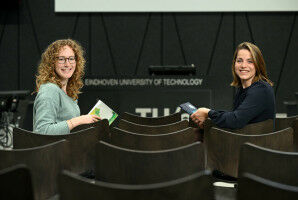
Sleep researchers Iris Huijben and Bernice Wulterkens developed new ways to measure sleep. Most people sleep between 7 and 8 hours every night. Although we are not aware of it, a lot happens in our bodies while we are lying in bed. But what if sleeping becomes a problem? To gain more insight into the sleep process, TU/e researchers Iris Huijben and Bernice Wulterkens took a closer look at current sleep measurements.


Health - Mar 30
Minister Rianne Letschert visits Twente: education and science as drivers of the hospital of the future
Minister Rianne Letschert visits Twente: education and science as drivers of the hospital of the future
Social Sciences - Mar 30
New Research Project on African American Thought and the German Colonial Imagination
New Research Project on African American Thought and the German Colonial Imagination
Politics - Mar 30
Researcher Carolina Moreno calls for official science communication to counter disinformation in critical periods
Researcher Carolina Moreno calls for official science communication to counter disinformation in critical periods
Health - Mar 30
Simple screening blood test could help identify undiagnosed heart failure in people living with diabetes
Simple screening blood test could help identify undiagnosed heart failure in people living with diabetes
Economics - Mar 30
University of Glasgow and Lloyds Banking Group announce groundbreaking agentic AI research programme
University of Glasgow and Lloyds Banking Group announce groundbreaking agentic AI research programme
Astronomy & Space - Mar 30
ANU lends its expertise in laser communications to support NASA's Artemis II crewed moon mission
ANU lends its expertise in laser communications to support NASA's Artemis II crewed moon mission
Life Sciences - Mar 27
Understanding the Brain - TU Ilmenau's EU EMBRACE Project Nominated for European Excellence Award
Understanding the Brain - TU Ilmenau's EU EMBRACE Project Nominated for European Excellence Award
Social Sciences - Mar 27
A manual addresses, for the first time in Spain, child and adolescent sexual exploitation
A manual addresses, for the first time in Spain, child and adolescent sexual exploitation