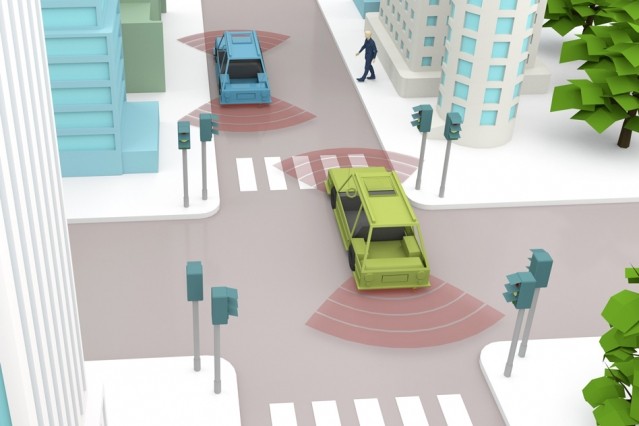
"Before we can trust machines like autonomous vehicles, we have a number of challenges," says Iyad Rahwan.
This summer, a survey released by the American Automobile Association showed that 78 percent of Americans feared riding in a self-driving car, with just 19 percent trusting the technology. What might it take to alter public opinion on the issue? Iyad Rahwan, the AT&T Career Development Professor in the MIT Media Lab, has studied the issue at length, and, along with Jean-Francois Bonnefon of the Toulouse School of Economics and Azim Shariff of the University of California at Irvine, has authored a new commentary on the subject, titled, "Psychological roadblocks to the adoption of self-driving vehicles," published today in Nature Human Behavior. Rahwan spoke to MIT News about the hurdles automakers face if they want greater public buy-in for autonomous vehicles. Q: Your new paper states that when it comes to autonomous vehicles, trust "will determine how widely they are adopted by consumers, and how tolerated they are by everyone else." Why is this? A: It's a new kind of agent in the world. We've always built tools and had to trust that technology will function in the way it was intended. We've had to trust that the materials are reliable and don't have health hazards, and that there are consumer protection entities that promote the interests of consumers. But these are passive products that we choose to use.
TO READ THIS ARTICLE, CREATE YOUR ACCOUNT
And extend your reading, free of charge and with no commitment.