This is an exciting research project involving some of the best scientists in the country and is reward for all the unseen hard work undertaken by researchers at Bristol during the crisis. It’s great to be working on a project with such a high potential societal impact.
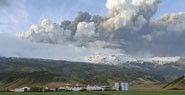
Eyjafjallajökull, the Icelandic volcano that grounded air traffic across Europe last year, is the subject of a new research project at the University of Bristol, funded by the Natural Environment Research Council (NERC). Today is the first anniversary of the lifting of the UK airspace ban following the series of eruptions of Eyjafjallajökull which lasted from March until late May 2010. The study involves Professor Steve Sparks, Dr Matt Watson and Dr Jeremy Phillips of Bristol's School of Earth Sciences and Dr Andrew Hogg from the Department of Mathematics. In the first part of the project, the researchers will use satellite data to develop new algorithms for detecting and quantifying the microphysical properties of volcanic ash. This will provide observations to augment data from the Met Office model and help decision makers to determine when and where it is safe to fly. The second part involves modelling the transition from initial eruption column (that is, the column of hot volcanic ash rising several miles into the air emitted during an explosive volcanic eruption) to layered downwind cloud - a process critical to our understanding of how distal clouds form. The total grant from NERC amounts to around £3million.
TO READ THIS ARTICLE, CREATE YOUR ACCOUNT
And extend your reading, free of charge and with no commitment.