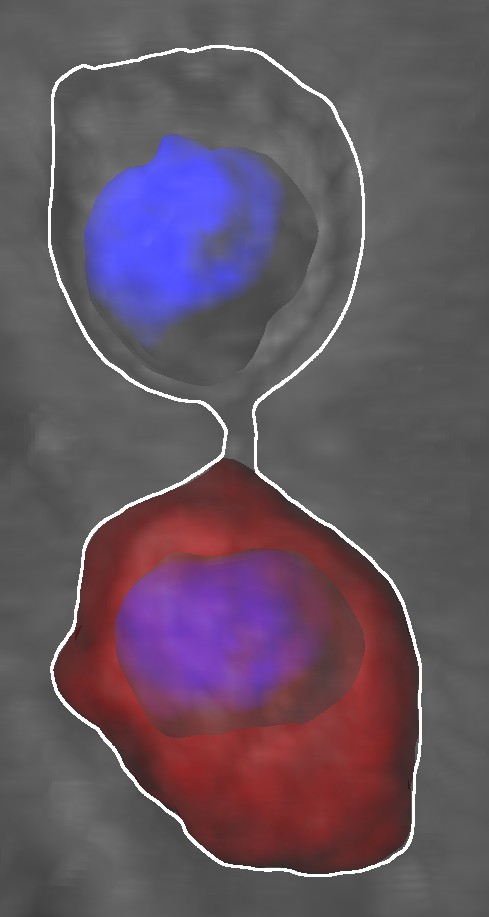
(jpg, 165 KB) Dividing neural stem cells (outlined with a white line) establish a diffusion barrier in the endoplasmic reticulum during cell division. This barrier participates in the asymmetric segregation of aging factors such as ubiquitinated, damaged proteins (red) during cell division (DNA (blue) of 2 daughter cells at the end of mitosis). The barrier ensures proper neural stem cell proliferation. (Image: UZH)
Neural stem cells generate new neurons throughout life in the mammalian brain. However, with advancing age the potential for regeneration in the brain dramatically declines. Scientists of the University of Zurich now identified a novel mechanism of how neural stem cells stay relatively free of aging-induced damage. A diffusion barrier regulates the sorting of damaged proteins during cell division. Yeast are good for making wine, bread, and brewing beer. But they are also a good model for neural stem cells in the mammalian brain. It was known that with every division cellular aging factors are asymmetrically distributed between the mother and the daughter cell, allowing for rejuvenation and full life span of the daughter independent of the age of the mother cell.
TO READ THIS ARTICLE, CREATE YOUR ACCOUNT
And extend your reading, free of charge and with no commitment.