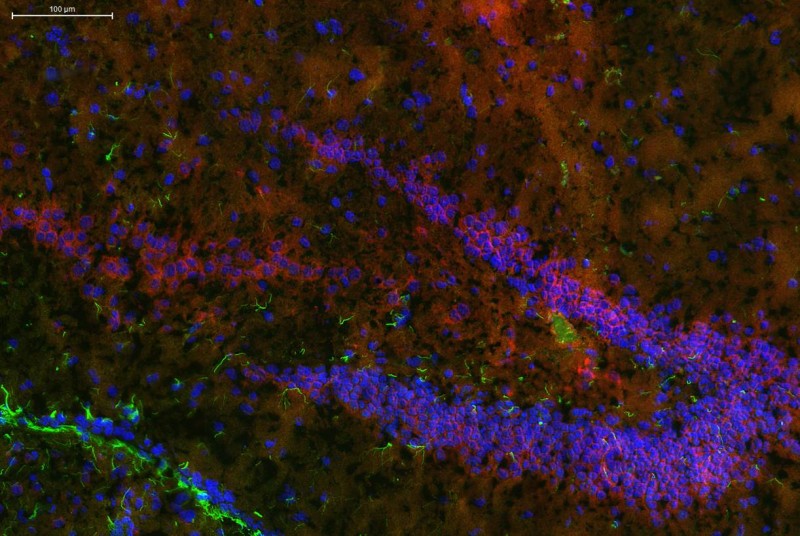
 A part of the Hippocampus brain structure with fluorescent endocannabinoid system in neurons.
Media releases, information for representatives of the media Media Relations (E) Endogenous cannabinoids (endocannabinoids) play an important role in the brain and immune system. Bern researchers from the National Centre of Competence in Research (NCCR) "TransCure" have now found a new way to influence the endocannabinoid system. Anti-inflammatory, analgesic as well as anxiolytic effects could be achieved in an animal model. Endocannabinoids are substances similar to fatty acids which are produced by the body. They activate specific cannabinoid receptors and among other things can exert anti-inflammatory or analgesic effects. Cannabis or tetrahydrocannabinol (THC) exhibit similar therapeutic effects in clinical use, but they are fraught with adverse effects. In contrast, endogenous cannabinoids are only produced in the cells when the body needs them, and therefore cannot be overdosed.
TO READ THIS ARTICLE, CREATE YOUR ACCOUNT
And extend your reading, free of charge and with no commitment.
Your Benefits
- Access to all content
- Receive newsmails for news and jobs
- Post ads