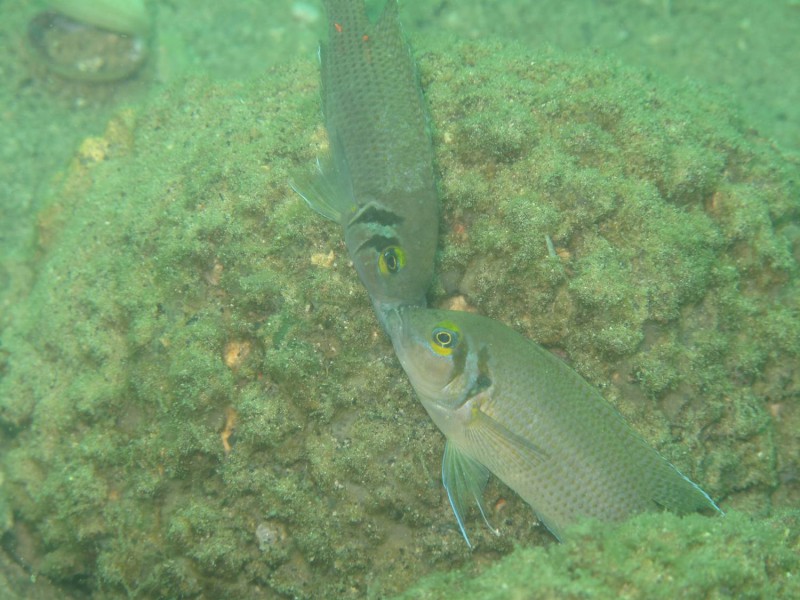
Two dominant cichlids (Neolamprologus pulcher) in an aggressive encounter.
Photo: Dario Josi, IEE
Media releases, information for representatives of the media Media Relations (E) Researchers from Bern, England and Australia have observed the "Princess of Lake Tanganyika" cichlid in territorial conflicts and made an astonishing discovery; the conflicts distract the animals from their surrounding environments to such an extent that they notice lurking dangers only very late - yet the fish have a strategy which saves their lives: instead of trying to escape from predators, they defend themselves. For animals which live in groups, the ability to prevail among their own kind is of decisive importance. In the animal kingdom, winning aggressive conflicts is often important for achieving a high social status, impressing potential mates or gaining territories. As discovered during a recent study by a team of researchers led by Prof. Barbara Taborsky from the department of Behavioural Ecology at the University of Bern, Dr. Stefan Fischer from the University of Liverpool, and Sybille Hess from James Cook University in Australia, aggressive behaviour has the disadvantage, however, that it can distract an animal from danger. In aquarium experiments, the researchers were able to prove that when involved in conflicts with conspecifics, cichlids noticed predatory fish later. In a natural environment they would therefore be at a higher risk of being eaten. In a blind fury.
TO READ THIS ARTICLE, CREATE YOUR ACCOUNT
And extend your reading, free of charge and with no commitment.