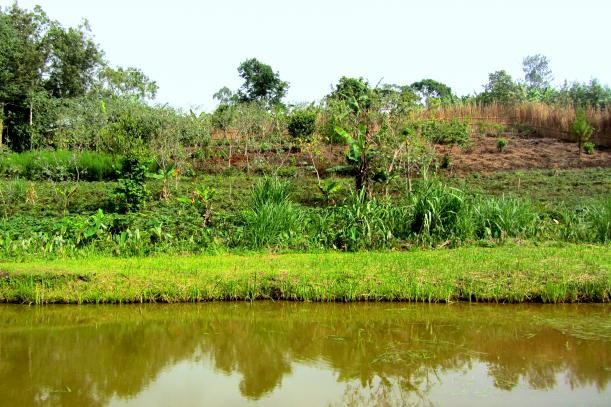
Agricultural landscape in Uganda
Agroecology is a better alternative than large-scale agriculture, both for the climate and for small farmers in Sub-Saharan Africa, according to researcher Ellinor Isgren from Lund University in Sweden. This agricultural model preserves biodiversity and safeguards food supply while avoiding soil depletion. "We must consider other, alternative models for developing agriculture, particularly in countries that have not already transitioned to large-scale rationalisation. Large parts of the world's soil have already been degraded by depletion and excessively resource-intensive agriculture", says Ellinor Isgren, a researcher at the Lund University Centre for Sustainability Studies. She maintains that today's intensive, large-scale agriculture brings a major environmental impact in the form of soil depletion, high use of pesticides, high energy and water consumption and reduced biodiversity. Large areas are often cultivated with one or only a few different crops, making this type of agriculture vulnerable to pests, diseases and climate change. Large-scale agriculture also requires major investments in the form of machinery, grains and seed, while utilising little labour.
TO READ THIS ARTICLE, CREATE YOUR ACCOUNT
And extend your reading, free of charge and with no commitment.