Stacey Shackford
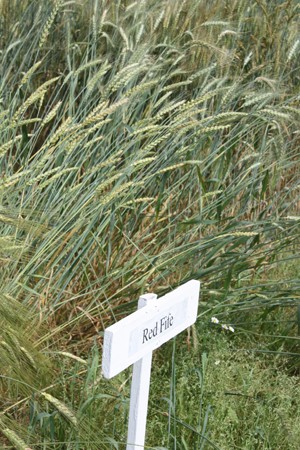
For a grain, red fife wheat has a colorful history. Famed for its flavor, it is believed to have crossed several continents and the Atlantic before arriving in 1842 in Canada, where it gained a foothold and spawned many modern varieties. It is now enjoying a revival, and farmers, millers and marketers are eager to get their hands on authentic seeds from this original "ancient variety" of heritage wheat - but Cornell scientists have discovered some sources are not necessarily what they seem. While testing red fife seeds from a local source, plant breeder Mark Sorrells found traces of semi-dwarfs - varieties that are shorter in height but higher in yield - that didn't exist until the 1950s, and therefore, could not be the original. Using a combination of modern science and old-fashioned research, consulting early 19th-century agricultural journals and illustrations, Sorrells believes he has isolated the true red fife and is now growing it in Cornell fields in Freeville. "We're going to make it available for organic farmers, and now they will know they are getting the real red fife, not seed contaminated with modern varieties," said Sorrells, professor of plant breeding. "Making sure a variety is what the seller says it is, is really important," he added.
TO READ THIS ARTICLE, CREATE YOUR ACCOUNT
And extend your reading, free of charge and with no commitment.