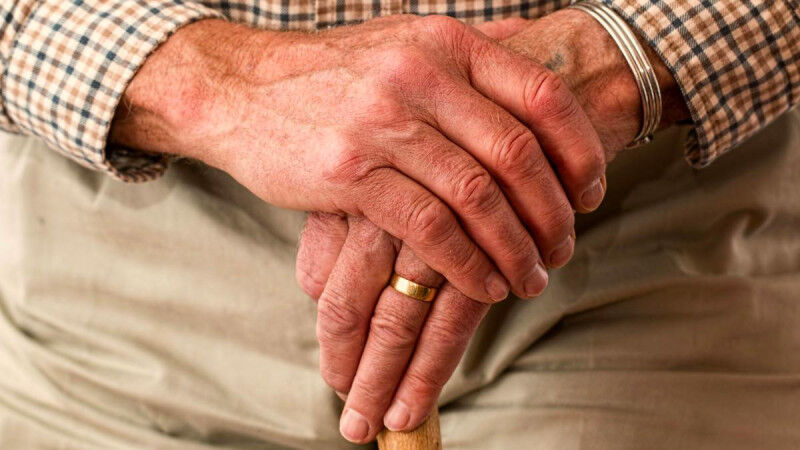
Around 600 people in Ticino have Parkinson’s, and the number of cases is expected to increase: "Those who get older are at greater risk of suffering from these degenerative diseases, and Parkinson’s is the second after Alzheimer’s," explained Salvatore Galati. "But while it is true that the peak incidence of this neurodegenerative disorder is around the age of 65, there are also cases affecting young people."
Precisely for this reason, the expert recalled, it is essential to recognise the first symptoms of the disease, even though each patient manifests the condition differently: "Parkinson’s disease is a chronic condition that evolves over time. Fortunately, with effective therapies-especially pharmacological treatments-we can effectively manage the symptoms, particularly in the early stages of treatment, a phase often referred to as the ’honeymoon period’. As the disease progresses, motor fluctuations and involuntary movements alter its overall picture, making symptoms more apparent. Throughout the course of the disease, individuals not only face motor symptoms such as tremors, rigidity, and slow movements but also frequently encounter non-motor symptoms. These non-motor symptoms may include mood changes, apathy, constipation, and various other disorders."
Regarding the control of dyskinesias - the involuntary, uncontrolled movements that appear approximately 7-10 years after the onset of the first symptoms - very effective drug therapies have been developed over the years. "Currently, there are no medications available that can slow the progression of Parkinson’s disease. This is why last year’s theme for World Parkinson’s Day on 11 April was focused on exercise, which shows promise in this area. This year , the emphasis is on activities related to music, theatre, and art, which may serve as complementary practices in treating Parkinson’s disease," recalled the USI lecturer.
Delving into complementary approaches to drug therapy, Salvatore Galati explained why disciplines such as music or theatre can benefit those with Parkinson’s: "A small but significant group of people with Parkinson’s disease develops a certain impulsiveness, which is distinct from aggressiveness. Essentially, they have a thought and act on it recklessly and compulsively. Activities like theatre or painting can help channel these negative behaviours into creative expression. As a result, patients may respond by becoming more creative or rediscovering the creativity they once had in their lives. On a medical level, considering this is a complex subject with vast scientific literature, we can explain certain behaviours through the close relationship between dopamine and creativity. Dopamine is a neurotransmitter that is progressively reduced in the brain of individuals with Parkinson’s disease. While medications can help restore dopamine levels, they do so indiscriminately rather than through the physiological regulation seen in healthy individuals. In this context, it is essential to understand that our brains contain various circuits that play a significant role in dictating our behaviour. Here, a creative brain is a brain that has a balance and allows us to stay focused on specific tasks while also being able to diverge from them when necessary. It effectively manages our emotions. When there is an imbalance-often due to alterations in dopamine associated with degenerative processes-creativity can be negatively impacted. This can lead to decreased productivity. Additionally, the administration of certain drugs may result in pathological behaviour. Our approach is to provide patients with an environment that fosters creativity, helping to shift their focus towards a more positive outlook. Creating art and making objects helps limit destructive behaviours arising from uncontrolled impulses while simultaneously providing opportunities for creativity. In essence, important stimuli can also stem from the social context. We encourage patients to participate in workshops that include physical activities, dance, sculpture, painting, and theatre, as these activities serve as valuable sources of inspiration."
The neurologist also mentioned the importance of the people, both family and professional, surrounding the patient: "As a neurologist, I believe that family members and caregivers play a vital role in patient care. Often, a patient may not immediately recognise the various symptoms of their condition or may not be aware of certain behaviours they exhibit. In contrast, those close to the patient, such as family and caregivers, are usually more observant of these changes. Therefore, as a physician, it is essential for me to consider not only the clinical aspects of the patient’s condition but also the insights shared by family members and caregivers. Their observations can be invaluable in helping me make informed therapeutic decisions."
Salvatore Galati concluded by saying that he is confident that in the coming years, molecules will become available that can restore the damage created by the disease.