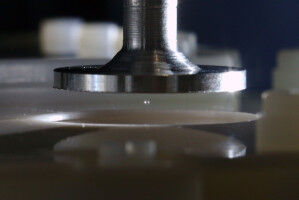
Empa’s multicellular model, which is mimicking the placental barrier: a core of connective tissue cells, surrounded by trophoblast cells.
An Empa team has succeeded in developing a new three-dimensional cell model of the human placental barrier. The "model organ" can quickly and reliably deliver new information on the intake of substances, such as nano-particles, by the placental barrier and on any possible toxic effects for the unborn child. This knowledge can also be used in the future for the development of new approaches to therapy during pregnancy. During its development, the foetus is extremely susceptible to toxic substances. Even the tiniest doses can cause serious damage. In order to protect the unborn child,one of the tasks of the placenta is to act as a barrier to "filter out" harmful substances, while at the same time providing the foetus with the nutrients it needs. In recent years, however, evidence has increasingly suggested that the placental barrier is not 100% effective and that nano-particles are actually able to penetrate it.
TO READ THIS ARTICLE, CREATE YOUR ACCOUNT
And extend your reading, free of charge and with no commitment.