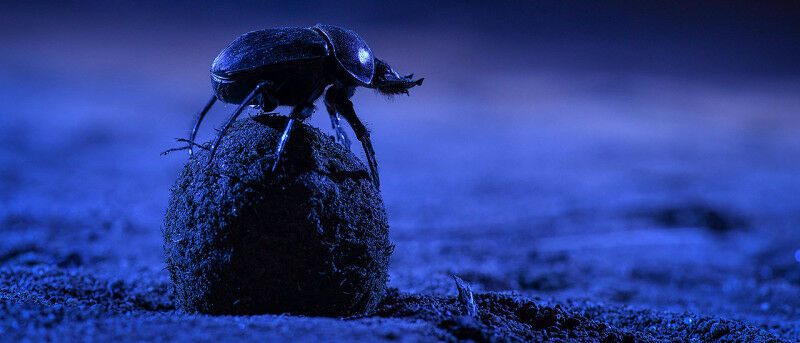
A nocturnal dung beetle climbing atop its dung ball to survey the stars before starting to roll. (Image: Chris Collingridge)
A nocturnal dung beetle climbing atop its dung ball to survey the stars before starting to roll. (Image: Chris Collingridge) 07/29/2021 - Light pollution makes it difficult for dung beetles to find their way. This is probably also true for other nocturnal insects and birds, as researchers suspect. The growth of cities with their streetlights and illuminated buildings has led to brighter nights. This has consequences for animals: the artificial light illuminates them directly, but also lights up the sky, making the stars invisible. Yet many animals rely on the stars as their compass for orientation. Until now, no scientific study has examined the effects of light pollution on animal star orientation.
TO READ THIS ARTICLE, CREATE YOUR ACCOUNT
And extend your reading, free of charge and with no commitment.