The marriage of computer science and the study of past life has created an incredibly exciting field - one which should not be limited to an academic sphere. We believe that with concerted efforts to communicate this work, virtual palaeontology can increase the public understanding of evolution and provide a valuable addition to the biological educator’s armoury.
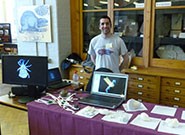
A new way to learn about dinosaurs and other prehistoric creatures, which harnesses some of the cutting edge techniques used by palaeontologists to study fossils, is being pioneered by researchers at the University of Bristol. CT scanning and 3D printing allow palaeontologists to see fossils in ways they never could before, to study delicate bones and other ancient remains in great detail without destroying the precious specimens themselves. Now Imran Rahman of Bristol's School of Earth Sciences and colleagues aim to bring such 'virtual palaeontology' to the wider public. Rahman said: "Fossils provide us with the only direct evidence of prehistoric life. Without them we would know next to nothing about such fascinating extinct creatures as dinosaurs, trilobites and woolly mammoths. While most fossils are flattened, two-dimensional specimens, sometimes, under unusual circumstances, fossils can be three-dimensionally preserved. "Such 3D fossils provide scientists with an unparalleled opportunity to reconstruct the biology and evolution of extinct creatures.
TO READ THIS ARTICLE, CREATE YOUR ACCOUNT
And extend your reading, free of charge and with no commitment.