Luis Lara
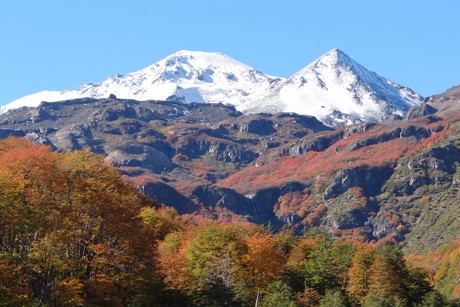
Following a major earthquake in southern Chile in 2010, several nearby volcanoes permanently sank several inches into the ground. Cornell earth scientists think they might know why - and this knowledge could help illuminate the connection between earthquakes and volcanic activity. Publishing online June 30 Geoscience, a study led by Matthew Pritchard, associate professor of earth and atmospheric sciences, shows that five volcanic regions within 248 miles of the 8.8-scale earthquake in Maule, Chile, sank up to 6 inches into the ground after the earthquake, almost instantly. This process, called subsidence, has never been seen on this scale in volcanic regions and could lead to insights about the "plumbing systems" underneath volcanoes, Pritchard said. Earth scientists have long known that earthquakes sometimes trigger volcanic eruptions. "But in this case, there is strong evidence that earthquakes are also promoting some other kind of activity, which doesn't lead to eruption in the volcanic region," Pritchard said. The Maule earthquake shared similar subsidence patterns with a 2011 earthquake in Tohoku, Japan, which earth scientists in Japan happened to be studying at around the same time.
TO READ THIS ARTICLE, CREATE YOUR ACCOUNT
And extend your reading, free of charge and with no commitment.