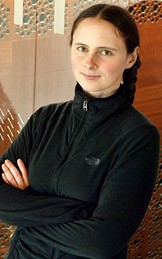
Nadia Heninger (above) and Bill Zeller, graduate students in computer science, provided technological expertise in developing the All Our Ideas project.
Catholic Relief Services of Baltimore faced a daunting challenge: getting advice from several thousand people at once. To improve its hiring and training efforts, the charity, which assists poor and vulnerable people around the world, wanted to ask its employees what makes someone an effective relief-services worker. But surveying the organization's more than 4,000 employees, who work out of 150 offices worldwide and speak a range of languages, was no easy task. "We were looking for a tool for mass collaboration," said Stephen Moles, a manager in the charity's human resources department. "Most of what we found allowed people to post comments and edit documents together, but neither of those functions exactly suited our needs." Fortunately, an acquaintance referred Moles to Matthew Salganik . An assistant professor of sociology at Princeton, Salganik has teamed up with Princeton computer scientists to develop a new way for organizations to solicit ideas from large groups of people and simultaneously have those same people vote on the merit of the ideas generated by the group. Called " All Our Ideas ," the survey tool melds concepts from sociology and computer science to allow an organization to quickly set up a free website where large numbers of people can contribute and rank ideas.
TO READ THIS ARTICLE, CREATE YOUR ACCOUNT
And extend your reading, free of charge and with no commitment.