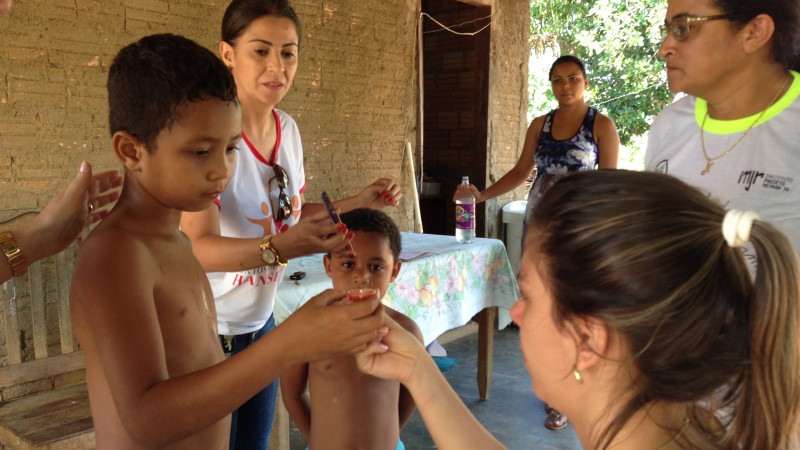
Post-exposure prophylaxis with a single dose of the antibiotic rifampicin could massively reduce the global burden of leprosy. (Photo: Peter Steinmann/Swiss TPH)
Post-exposure prophylaxis with a single dose of the antibiotic rifampicin could massively reduce the global burden of leprosy. (Photo: Peter Steinmann/Swiss TPH) - Post-exposure prophylaxis with a single dose of the antibiotic rifampicin is safe, can be integrated into different leprosy control programmes, and is generally well accepted by patients, their contacts, and healthcare workers. These are the results of the Leprosy Post-Exposure Prophylaxis (LPEP) programme published yesterday in the peer-reviewed journal The Lancet Global Health. The Novartis Foundation-initiated programme covered more than 150,000 people across seven countries. Swiss TPH contributed to LPEP through monitoring and quality control, protocol development and data analysis. New results from the largest ever research programme on combining contact tracing with prophylactic treatment indicate this approach could massively reduce the global burden of leprosy. The Leprosy Post-Exposure Prophylaxis (LPEP) programme - initiated by the Novartis Foundation - traced 170,000 people who had been in contact with individuals newly diagnosed with leprosy, and treated 150,000 of them with a single dose of rifampicin to prevent disease.1 Use of post-exposure prophylaxis is expected to interrupt transmission of the bacteria causing leprosy, meaning that if this approach is scaled up globally near-elimination of the disease could become a reality in a single generation.
TO READ THIS ARTICLE, CREATE YOUR ACCOUNT
And extend your reading, free of charge and with no commitment.