Controlling hybrid quantum bits is child’s-play
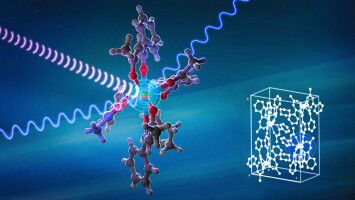
New research has demonstrated a way to make bismuth electrons and nuclei work together as qubits in a quantum computer. The discovery takes us a key step further to creating practical quantum computing which could tackle complex programs that would otherwise take the lifetime of the universe to finish. The collaboration partners are based in the University of Warwick, UCL, ETH Zurich and the USA Sandia National Labs. Information on our normal computers is stored as bits, which are either ones or zeros. Quantum bits work differently in that each quantum bit can try out being a one and a zero at the same time , which makes them much more powerful for solving certain problems. Researchers have explored influencing the direction of spin in electrons to create those states but this approach has had its challenges. Gavin Morley from the University of Warwick's Department of Physics said: "Bismuth atoms in silicon crystals are great at working as quantum bits.