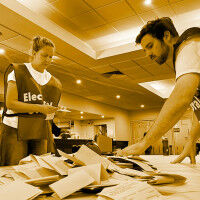
Could e-voting be the future for general elections?
New research from the Universities of Warwick and Newcastle could make e-voting more secure, accessible, and trustworthy for future elections. E-voting uses electronic devices to cast ballots either onsite at polling stations or online through the Internet. With the right use of technology, e-voting can allow a voter to verify that their vote is properly cast, recorded and tallied - a process known as being -end-to-end (E2E) verifiable-. While not currently permitted in UK general elections, e-voting has already helped decide the nation's prime minister. A combination of e-voting and paper ballots secured Liz Truss- victory in the Conservative leadership election. Before Boris Johnson dropped out of the running, plans were in place to use only e-voting for the following leadership election which saw Rishi Sunak take the top spot. A plain implementation of e-voting without verifiability, also known as -black-box e-voting-, is inherently insecure, but it has seen wide use in general elections in many countries, causing disputes over the election result.