Deep Learning Algorithms Helping to Clear Space Junk from our Skies
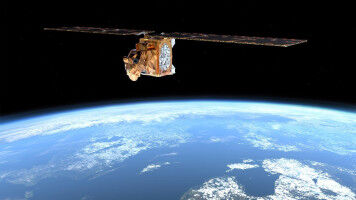
Researchers are at the forefront of developing some of the cutting-edge technology for the European Space Agency's first mission to remove space debris from orbit. How do you measure the pose - that is the 3D rotation and 3D translation - of a piece of space junk so that a grasping satellite can capture it in real time in order to successfully remove it from Earth's orbit? What role will deep learning algorithms play? And, what is real time in space? These are some of the questions being tackled in a ground-breaking project, led by EPFL spin-off, ClearSpace , to develop technologies to capture and deorbit space debris. With more than 34,000 pieces of junk orbiting around the Earth, their removal is becoming a matter of safety. Earlier this month an old Soviet Parus navigation satellite and a Chinese ChangZheng-4c rocket were involved in a near miss and in September the International Space Station conducted a maneuver to avoid a possible collision with an unknown piece of space debris, whilst the crew of the ISS Expedition 63 moved closer to their Soyuz MS-16 spacecraft to prepare for a potential evacuation. With more junk accumulating all the time, satellite collisions could become commonplace, making access to space dangerous. ClearSpace-1, the company's first mission set for 2025, will involve recovering the now obsolete Vespa Upper Part, a payload adapter orbiting 660 kilometers above the Earth that was once part of the European Space Agency's Vega rocket, to ensure that it re-enters the atmosphere and burns up in a controlled way.