As world leaders gather in Brazil for COP30, adaptation to climate change is one of the most pressing issues on the global agenda. While much attention focuses on reducing emissions, the work of TU Delft researchers and students together with their Brazilian partners highlights the equally urgent need to design for climate resilience, learning from and working together with communities already facing climate extremes.
-Adapting to a changing climate and extreme floods is not a challenge for tomorrow, but for todaysays Associate Professor Taneha Kuzniecow Bacchin. -Brazil, but also the Netherlands and other deltas and coastal regions around the world must rethink how we live with water. Successful climate adaptation requires cooperation between governments, private actors, and citizens. We also need to come together as designers, engineers, and social scientists to work on flood resilience and adapting our built environment to new extremes.-
Taneha adds: -The COP30 in Belém is a chance to strengthen the commitment from global actors to work together with local partners, and to make sure that the communities that are most vulnerable to floods are empowered to adapt to the rising waters.-
Engineering with empathy
Brazil-s climate challenge extends far beyond deforestation. Its river deltas and coastal cities face increasing flood risks as rainfall becomes more erratic and extreme events such as floods more frequent. In the Jacuí Delta, around Porto Alegre, Dutch and Brazilian partners are working closely with local communities, government, and knowledge institutions to co-develop adaptation strategies that fit the local context.

Flood resilience is not just about infrastructure. It is about combining design, governance and engineering thoughtfully, so that we come up with strategies that actually work for the communities we are working with.
Taneha Kuzniecow Bacchin
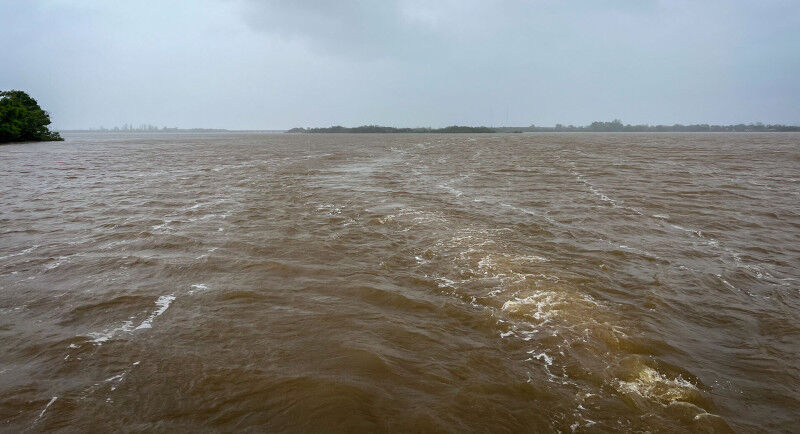
In May 2024, unprecedented storms and heavy rainfall caused catastrophic flooding in Rio Grande do Sul, submerging neighbourhoods, disrupting livelihoods, and exposing the fragility of urban systems. The disaster showed the urgent need for adaptation strategies that move beyond emergency response toward long-term, community-based resilience. Through the UN-funded Archipelago Project , TU Delft, planning and design experts in the Netherlands and local institutions are developing strategies for flood adaptation and inclusive recovery from past natural disasters. The project addresses climate resilience in the islands of Porto Alegre belonging to the Jacuí Delta, combining climate risk assessment, spatial planning and design with local knowledge and empowering institutions.
Learning through collaboration
In October 2025, 21 TU Delft master-s students from the EXTREME Architecture Studio, led by Job Schroën, travelled to Porto Alegre to collaborate with 21 students from the Federal University of Rio Grande do Sul (UFRGS) in a week-long, immersive workshop. Together, they investigated the challenges of flood-resilient architecture, learned how to conduct in-depth interviews with people living there, and explored how technical measures can be matched with community needs and capacities.

-Being in Porto Alegre matters. A week is short, but it gave us the chance to connect with academics, students, and local communities,- says Job Schroën. -Understanding the environment, the people, the climate, and the materials is essential for us.- He adds: -We visited the delta and the university to learn about the local context, and we built a bamboo pavilion on the islands using materials available here. A pavilion like this can be the basis for flood-resilient building solutions that make a real difference. These ways of working are not just lessons for Brazil, because we face similar challenges in Europe and the Netherlands.-
Personal dimension
Taneha: -I grew up in Porto Alegre and have witnessed the effects of climate change and other environmental challenges over the years. It means a great deal to me that we can contribute from a scientific point of view, by advancing knowledge on cooperation between scientific disciplines and design for resilience. We tackle immediate problems in infrastructure and land use. And we also work toward restoring nature long-term and finding new ways to live in harmony with it.-
TU Delft-s commitment to climate adaptation reflects an understanding that what happens in one delta resonates in others. The collaboration between the Netherlands and Brazil fosters two-way learning, exchanging methods of climate risk assessment, design, urban planning, and citizen participation. What is developed in Porto Alegre informs global discussions on how cities everywhere can adapt to the changing climate.
This month, Brazil hosts COP30, where adaptation is a central theme. On 18 November at 21:00 CET, Taneha and project partners together with prof. Carola Hein and Mila Avellar Montezuma will speak at the panel -From Laboratory Cities to Public Policy: Over a Decade of South-North Cooperation from Recife, The Hague, and Porto Alegre on Climate Extremes-, presented at the Brazilian Council of Architecture and Urbanism (CAU/BR) Pavilion in the Green Zone. During the panel a short video elaborated by students from EXTREME Architecture Studio on their experience and work on the Archipelago of Porto Alegre will be displayed.