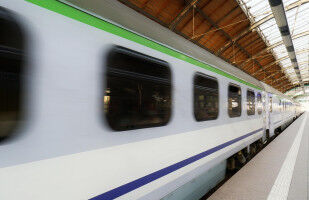
Researchers from the University of Stuttgart are involved in the ’AI Delta Learning’ consortium which aims to take autonomous driving to the next level. [Picture: Pixabay]
Researchers from the University of Stuttgart are involved in the 'AI Delta Learning' consortium which aims to take autonomous driving to the next level. Picture: Pixabay] Automated and autonomous vehicles are predicted to be the future of transportation, but their core element of artificial intelligence (AI) has previously struggled to master changing traffic situations. Scientists from the University of Stuttgart are now conducting research into new methods of machine learning as part of the "AI Delta Learning" project (with Mercedes-Benz AG as consortium leader) in order to train the AI module to gain a better understanding of its surroundings. The aim is to transfer existing knowledge from familiar domains to changing or new traffic situations with minimal effort, and to develop autonomous vehicles through to series production. Night and day, rain and shine, forests and fields: drivers need to adjust to very different surroundings, often within a short space of time. Previously though, it has been necessary to train an AI module for every individual situation to do what a human being can master intuitively. "Previous methods for training artificial intelligence have been too specialized and haven't been able to give the module any real understanding of its surroundings", explain Prof. Bin Yang and Robert Marsden from the Institute of Signal Processing and System Theory (ISS), who coordinate the University of Stuttgart's part of the project, which is carried out in the Department of Electrical Engineering and Information Technology.
TO READ THIS ARTICLE, CREATE YOUR ACCOUNT
And extend your reading, free of charge and with no commitment.