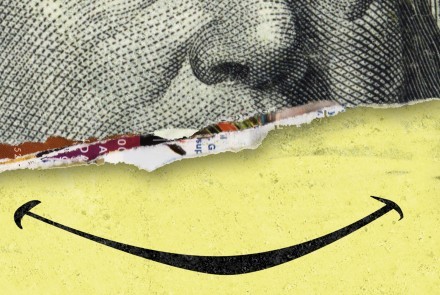
The Economics of Happiness (Jared Rodriguez / t r u t h o u t)
Over the last three decades global society has grown richer, but not better off. "Although the global economy has tripled since 1950, global human well-being, as estimated by the Genuine Progress Indicator (GPI), has been flat or decreasing since around 1978," said Dr Ida Kubiszewski. A study from The Australian National University (ANU) led by Dr Kubiszewski compared the GPI to Gross Domestic Product (GDP) in 17 countries representing the majority of the world's population. GPI is calculated through the measure of 25 different variables including consumption, income distribution, volunteer and household work, and importantly, environmental and social costs. "Interestingly, 1978 is also around the time that the human ecological footprint exceeded the Earth's capacity to support life on it. Other global indicators, such as life satisfaction, also began to level off around this time." Dr Kubiszewski said that both natural and social capital have decreased over the past decades. "The depletion of natural capital can be seen through the decreased quality of air and water in many countries, climate disruption, deforestation, acidification of our oceans, and many other impacts humans are having on the environment.
TO READ THIS ARTICLE, CREATE YOUR ACCOUNT
And extend your reading, free of charge and with no commitment.