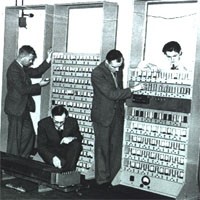
EDSAC to be recreated
A working replica of EDSAC, the first fully-operational stored-programme computer, is to be rebuilt in recognition of the pioneering computer scientists at the University of Cambridge who developed it. The project has been commissioned by the Computer Conservation Society (CCS) to inform the general public about Britain's computer heritage and, hopefully, to inspire future students of computing and engineering as a result. EDSAC, which stands for Electronic Delay Storage Automatic Calculator, was a general purpose research tool built at Cambridge in the 1940s under the direction of the late Professor Sir Maurice Wilkes. It ran its first programmes on 6 May 1949, when it calculated a table of squares. Plans have now been approved to recreate the computer, which was over two metres high and occupied a floor area of 20 square metres. It will be built in full public view at The National Museum of Computing at the UK's former code-breaking centre at Bletchley Park. The project is expected to take three to four years and is being funded by a consortium led by the computing entrepreneur, Hermann Hauser.
TO READ THIS ARTICLE, CREATE YOUR ACCOUNT
And extend your reading, free of charge and with no commitment.