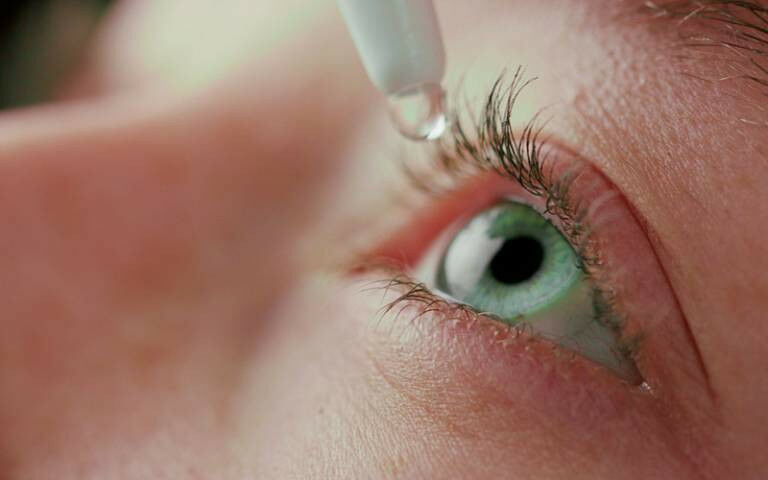
Eye drops - iStock
Eye drops - iStock A drug candidate, based on pioneering UCL and Moorfields Eye Hospital research and currently under development by SIFI S.p.A., has been found to be highly effective in treating a rare sight-threatening eye infection in a new international clinical trial. The findings, published in Ophthalmology , describe the efficacy and safety of the first drug candidate for the treatment of Acanthamoeba keratitis (AK), applying a novel and evidence-based treatment protocol. AK is one type of microbial keratitis (corneal infection) - a condition that results in inflammation of the cornea (the eye's clear protective outer layer). AK can cause extreme levels of pain as well as light sensitivity. AK is relatively uncommon, affecting about one in 37,000 contact lens wearers per year in the UK, but it is responsible for about half the cases of sight loss in this group. Contact lens wearers face an increased risk of the disease; a UCL and Moorfields team recently found that people who wear reusable contact lenses face nearly four times the risk of those wearing daily disposables, while showering with lenses in and wearing lenses overnight also each raised the risk by more than threefold.
TO READ THIS ARTICLE, CREATE YOUR ACCOUNT
And extend your reading, free of charge and with no commitment.