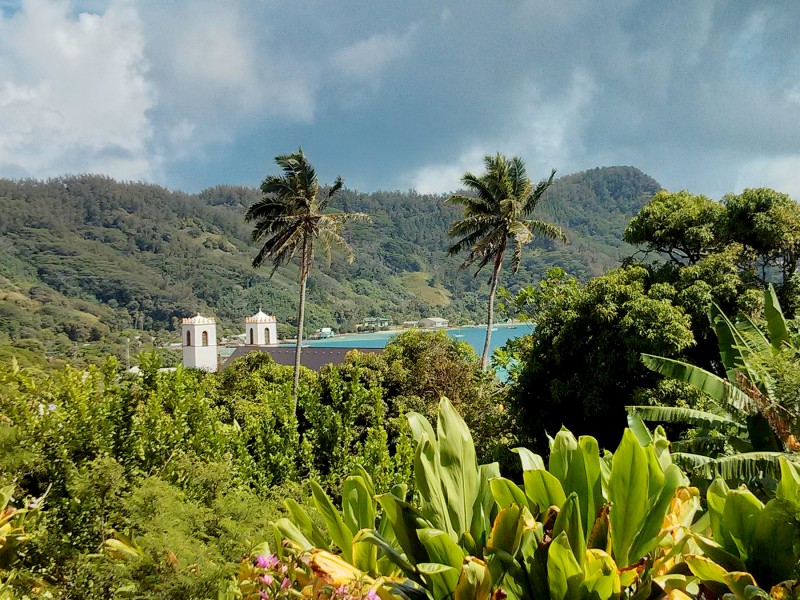
In Rikitea, French Polynesia, precipitation increased by 50 percent between the 1960s and the 1990s. Climate simulations indicate that this trend will be reversed by the expected recovery of the ozone layer (image: commons.wikimedia.org).
Media releases, information for representatives of the media Media Relations (E) The hole in the ozone layer above Antarctica has more far-reaching consequences than previously assumed. A study by Bernese climate researchers has now shown that it even affects precipitation in the tropical regions of the Pacific, 10,000 kilometres away. This new finding demonstrates how the climates of extremely remote areas are linked. The struggle to close the hole in the ozone layer that opens above the Antarctic each spring is seen as one of the greatest achievements of international environmental policy. In the late 1980s, the international community committed to drastically reducing the use of substances that deplete the ozone layer. This led to a steady recovery of the ozone layer above Antarctica, and in 2014, the World Meteorological Organization (WMO) announced that if this trend continued, recovery would be complete by the year 2050 at the latest. Now, however, an international team of researchers led by the Oeschger Centre for Climate Change Research at the University of Bern has concluded that the depletion of the ozone layer has had previously unknown effects on the climate system.
TO READ THIS ARTICLE, CREATE YOUR ACCOUNT
And extend your reading, free of charge and with no commitment.