

Art & Design - Today
New special exhibition at the Josephinum is dedicated to Austria's exceptional artist Gustav Klimt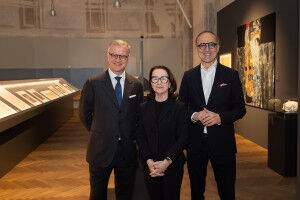
New special exhibition at the Josephinum is dedicated to Austria's exceptional artist Gustav Klimt
Health - Today
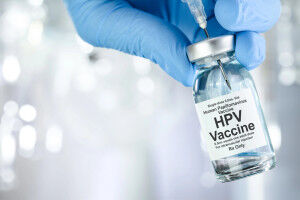
University of Manchester supports landmark Russell Group commitment to build healthier communities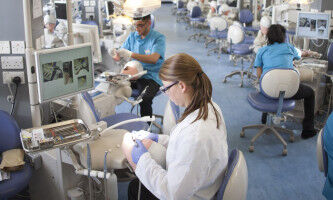
University of Manchester supports landmark Russell Group commitment to build healthier communities
Health - Today
Cortical thickness, schizophrenia, and causality in psychiatry: when the trace is mistaken for the cause
Cortical thickness, schizophrenia, and causality in psychiatry: when the trace is mistaken for the cause
Career - Today
Low-income students and girls are steered away from 'risky' creative careers at school
Low-income students and girls are steered away from 'risky' creative careers at school

Environment - Today
UCalgary expedition, with NASA, Canadian and European space agencies, sets out to better understand state of Arctic ice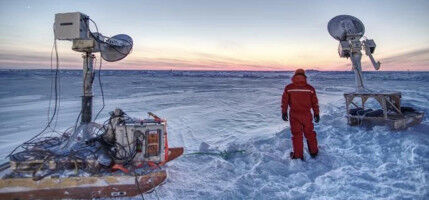
UCalgary expedition, with NASA, Canadian and European space agencies, sets out to better understand state of Arctic ice

Social Sciences - Mar 24
Young people's wellbeing is improving in Greater Manchester, major survey finds
Young people's wellbeing is improving in Greater Manchester, major survey finds
Environment - Mar 24
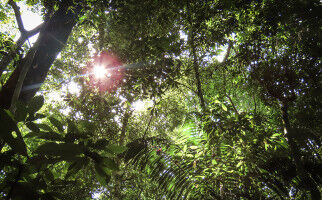
Australia's environment is improving but climate change is 'accelerating' damage to ecosystems and wildlife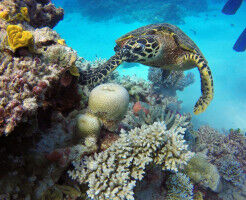
Australia's environment is improving but climate change is 'accelerating' damage to ecosystems and wildlife




science wire
EMPA, Swiss Federal Laboratories for Materials Science and Technology
Results 501 - 550 of 575.
Materials Science - Innovation - 03.05.2017
Materials in a digitalized world
We hope to lead you on a gripping journey through the world of research and innovation; you may be surprised at how broad the term «applied research» is defined at Empa.
Materials Science - Chemistry - 02.05.2017
Sodium and magnesium to replace lithium
Scientists supported by the SNSF have produced novel electrolytes for rechargeable sodium and magnesium batteries. The research group's objective was to develop alternatives to lithium-ion technology. A project supported by the Swiss National Science Foundation (SNSF) aims to find new materials which can be used in rechargeable batteries and eventually provide alternatives to the current lithium batteries.
Innovation - 30.03.2017
Facilitating innovation in space
Physics - Chemistry - 30.03.2017
Observing chemical reactions in real
At Empa's Electron Microscopy Center, a new transmission electron microscope has recently been used that offers completely new opportunities for the physical and chemical analysis of very small samples. It can be used, for example, to observe the growth of nanocrystals in real time - and to record it on video.
Career - 28.03.2017
Dominique Derome new Head of Laboratory
On 1 April 2017, Dominique Derome will become the new Head of the Laboratory for Multiscale Studies in Building Physics.
Event - Innovation - 23.03.2017
NEST receives SIA Umsicht award
Sport - 20.03.2017
The new NEST unit is slowly taking shape
The building work on the new Solar Fitness & Wellness unit is making steady progress. From August onwards, users will be able to enthusiastically indulge their sporting passions and then afterwards no less enthusiastically relax and recover from their efforts.
Materials Science - Environment - 14.03.2017
Honour for Empa Environmental Scientist
Physics - Chemistry - 02.03.2017
X-ray pulses make atomic oscillations
Researchers from the Max Born Institute in Berlin, Empa and the US National Institute of Standards and Technology (NIST) have, for the first time, been able to observe minute, ultrafast atomic oscillations in a crystal lattice with the help of a new experimental technique. These oscillations, which are triggered by light pulses, are based on a physical effect - Raman scattering - which was postulated about 100 years ago.
Environment - Music - 27.02.2017
At home in NEST
Two students are now living in the NEST unit Vision Wood. Communications intern Ramona Ronner visited Patryk Spera and David Norris in their very unusual flat, and talked to them about their life in a research environment.
Innovation - 22.02.2017
Reappointment of Gian-Luca Bona
Innovation - Environment - 22.02.2017
2nd edition of the Swiss Cleantech
Six years after it first appeared, the second edition of the Swiss Cleantech Report was unveiled today at a press conference in Zurich.
Physics - Chemistry - 14.02.2017
Measuring entropy
A scanning tunneling microscope (STM), used to study changes in the shape of a single molecule at the atomic scale, impacts the ability of that molecule to make these changes; the entropy of the molecule is changed and, in turn, can be measured.
Economics - 13.02.2017
Financial windfall for young scientists
On February 2nd the EU approved Empa's «COFUND» application for financial support to the tune of more than '3.5 million, thereby securing partial funding for 50 post-doc positions at Empa over the next five years within the framework of the EU's Marie Sk'odowska-Curie actions.
Materials Science - Innovation - 26.01.2017
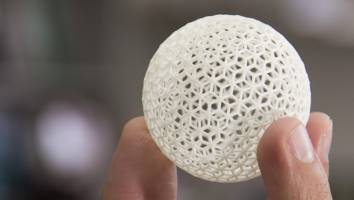
Empa offers Switzerland a platform to exchange information and knowhow in the field of Additive Manufacturing: During a technology briefing held at Empa Academy on January 18, experts from industry a
Environment - Chemistry - 19.01.2017
Hot on the heels of cement’s formulae
Bridges, houses, dams - for decades, cement has been a permanent feature of our urban environment. What is deemed a robust and lasting material, however, is actually fragile and highly complex on the inside.
Physics - Materials Science - 12.01.2017
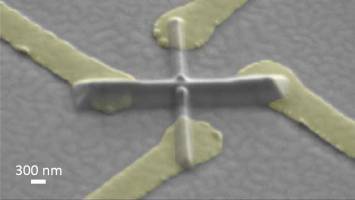
Nanotechnology is regarded as the key technology of the 21 st century, delivering the fundamental methods, which allow objects just a few hundred nanometers in size to be produced in any required shape.
Environment - Materials Science - 10.01.2017
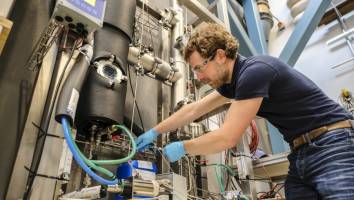
Can thermal solar energy be stored until wintertime? Yes, this is possible, using a cheap material like sodium lye.
Innovation - 15.12.2016
The All-In-One outdoor sleep system for
As of today the All-In-One sleep system developed by the «Polarmond» start-up company is ready for delivery.
Materials Science - Innovation - 13.12.2016

The gold thread developed at Empa is having extensive repercussions. Hot on the heels of a dessous collection being refined with the new technology, scarves and luxury watches are now also available.
Materials Science - Innovation - 08.12.2016
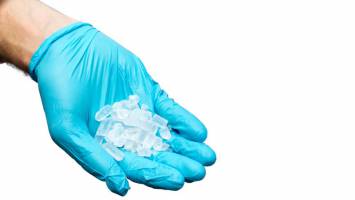
Aerogel is the perfect material for many insulation purposes. It is heat-resistant up to 600 degrees, ultralight, non-toxic - and provides excellent thermal insulation.
Event - 25.11.2016

Environment - Materials Science - 23.11.2016

NEST, the modular research and innovation building by Empa and Eawag, is teeming with life. Since it opened its doors in May 2016, over 5,000 visitors have flocked to see the building.
Materials Science - Physics - 17.11.2016
Switching off vibrations
Macroscopic crystal structures can absorb unwanted vibrations or filter noise - without any electronics or electricity whatsoever.
Chemistry - Innovation - 09.11.2016
Astronomy & Space - 27.10.2016
Finally red!
Empa researchers have pulled off a masterstroke of ceramics research: as of now, a dark-red ceramic bezel adorns a Swiss luxury watch - a world premiere and stunning example of top-flight materials science.
Environment - 26.10.2016
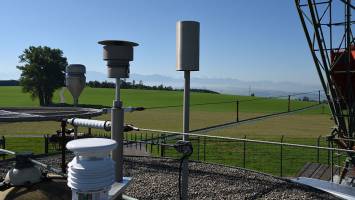
A new measurement station for air pollution monitoring has been opened in Beromünster, Canton Lucerne, the first since 1990. The measurement station, operated by Empa and the Swiss Federal Office for the Environment is located on the site of the former international radio transmitter and monitors air pollution in the rural area of the Swiss Plateau.
Physics - Materials Science - 17.10.2016
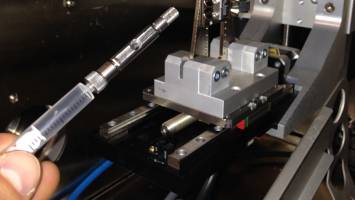
Several peptides have an antibacterial effect - but they are broken down in the human body too quickly to exert this effect.
Materials Science - Chemistry - 06.10.2016
Nobel Prize in Chemistry: Empa involved
Transport - Materials Science - 06.10.2016
Rapidly fueled for a long range journey
Empa has launched Switzerland's first hydrogen station for passenger cars on its campus in Dübendorf.
Materials Science - Chemistry - 06.10.2016
Nobel Prize: Empa involved in research
Materials Science - Chemistry - 06.10.2016
Empa involved in Nobel research
Empa is delighted to acknowledge the awarding of the Nobel Prize in Chemistry 2016 to Bernard L. Feringa, Fraser Stoddart and Jean-Pierre Sauvage - as it made a major contribution in 2011 to a research project carried out by Bernard L. Feringa.
Astronomy & Space - 29.09.2016
So long and thanks for the probes
For twelve years, the space probe Rosetta served mankind. The European Space Agency (ESA) mission is now drawing to a close as the probe reaches its final resting place on the target comet Tschuri on September 30, 2016.
Physics - Pharmacology - 08.09.2016
Affordable detectors for gamma radiation
A research team at Empa and ETH Zurich has developed single crystals made of lead halide perovskites, which are able to gage radioactive radiation with high precision. Initial experiments have shown that these crystals, which can be manufactured from aqueous solutions or low-priced solvents, work just as well as conventional cadmium telluride semi-conductors, which are considerably more complicated to produce.
Sport - 06.09.2016
Exploding boules balls
A local festival, a pleasant summer's evening, a friendly game of boules - and suddenly a deafening bang.
Physics - 02.09.2016
Michel Calame appointed new head of lab
The Reliability Science and Technology lab is set to focus on the topic of nanoscale transport phenomena and will have a new head, Michel Calame.
Astronomy & Space - Materials Science - 09.08.2016
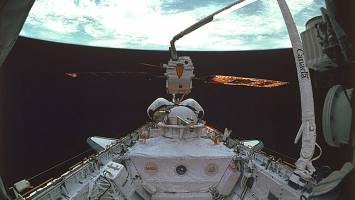
The much-travelled European research satellite Eureca was taken from the aerospace exhibition in the Swiss Museum of Transport in Lucerne and loaded onto a truck before setting off on yet another adventure.
Physics - Environment - 21.07.2016
New journal for nanosafety
Empa researcher Bernd Nowack is one of the editors-in-chief of the trade journal NanoImpact, which was launched in May, the first journal to focus solely on nanosafety research.
Environment - 01.07.2016
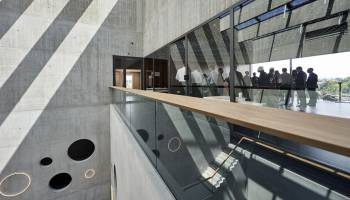
On 29 June the Swiss Federal Office of Energy hosted an information event at Empa presenting the annual report 2015 of the role model function of the Federal Administration for energy efficiency ("Energie-Vorbild Bund").
Physics - Materials Science - 30.06.2016
The interplay between adhesion and
An international team of researchers headed by the University of Zurich and with participation of Empa has developed a system that enables them to electrically switch back and forth between adhesion and stiction (static friction) of a water drop on a solid surface.
Physics - Electroengineering - 15.06.2016
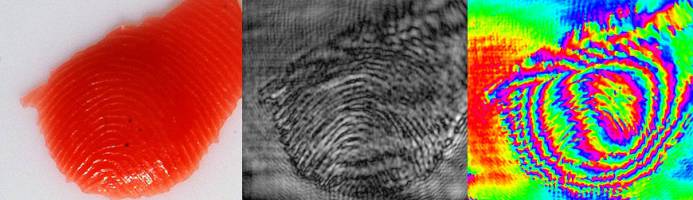
Although terahertz radiation is as harmless as a lukewarm cup of tea, it can penetrate textiles and come into with the surface of the skin.
Materials Science - 08.06.2016
Instruments with Empa knowledge in space
Environment - 25.05.2016
Particle growth in the atmosphere
An international team of researchers led by the Paul Scherrer Institute (PSI) and with the participation of researchers from Empa, the Swiss Federal Laboratories for Materials Science and Technology, has demonstrated how fine dust particles (so-called aerosols) in the atmosphere are formed from natural substances such as those evaporated from trees.
Environment - Innovation - 20.05.2016
NEST: building of the future is up and
A unique research and innovation platform has opened its doors: on 23 May 2016, the modular experimental building NEST was inaugurated on the Dübendorf campus of the two research institutes Empa and Eawag.
Materials Science - 13.05.2016
Three of a kind
Transport - 28.04.2016
Vision Wood docks to NEST
Materials Science - Health - 21.04.2016
Asphalt’s miraculous cure
Empa scientists have developed a technique that can repair old, cracked asphalt. They got their inspiration from a method used in cancer treatment based on nanoparticles.
Materials Science - Innovation - 13.04.2016
Opening of Empa’s Coating Competence
At Empa's new Coating Competence Center, which has just opened, tailor-made surface technologies find their way from the research labs to marketable industrial applications.
Environment - Earth Sciences - 05.04.2016
Off to Tierra del Fuego
Levels of greenhouse gas CO2 continue to rise and are about to exceed the next threshold. Empa makes sure that this and other air pollutants can be measured correctly and in a globally comparable way.
Materials Science - Electroengineering - 05.04.2016
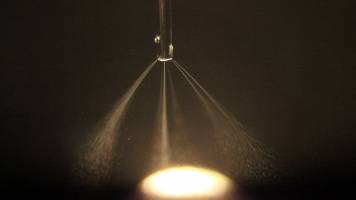
Researchers from Empa and the University of Basel have developed a new method of electrospraying which enables artificial muscles to be fabricated from nanometer-thin silicone layers.


Art & Design - Today
New special exhibition at the Josephinum is dedicated to Austria's exceptional artist Gustav Klimt
New special exhibition at the Josephinum is dedicated to Austria's exceptional artist Gustav Klimt
Health - Today
University of Manchester supports landmark Russell Group commitment to build healthier communities
University of Manchester supports landmark Russell Group commitment to build healthier communities
Health - Today
Cortical thickness, schizophrenia, and causality in psychiatry: when the trace is mistaken for the cause
Cortical thickness, schizophrenia, and causality in psychiatry: when the trace is mistaken for the cause
Career - Today
Low-income students and girls are steered away from 'risky' creative careers at school
Low-income students and girls are steered away from 'risky' creative careers at school
Environment - Today
UCalgary expedition, with NASA, Canadian and European space agencies, sets out to better understand state of Arctic ice
UCalgary expedition, with NASA, Canadian and European space agencies, sets out to better understand state of Arctic ice
Social Sciences - Mar 24
Young people's wellbeing is improving in Greater Manchester, major survey finds
Young people's wellbeing is improving in Greater Manchester, major survey finds
Environment - Mar 24
Australia's environment is improving but climate change is 'accelerating' damage to ecosystems and wildlife
Australia's environment is improving but climate change is 'accelerating' damage to ecosystems and wildlife