Engineers Aim To Lighten the Load for Manufacturers
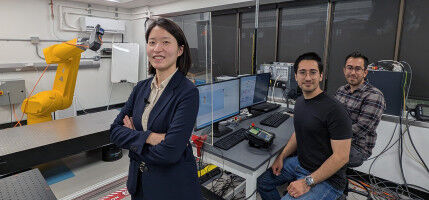
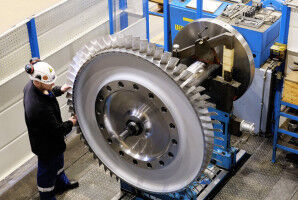
As members of Carnegie Mellon University's NextManufacturing Center , Kate Whitefoot and Levent Burak Kara are using additive manufacturing, also known as 3D printing, to reimagine what is possible when creating component parts. "What parts consolidation allows us to do is monolithically make components that would normally have to be assembled together," said Whitefoot, an assistant professor of mechanical engineering and engineering and public policy. "This can substantially reduce the costs associated with making those parts, and also potentially allow us significant weight savings. So this is something that manufacturers are really interested in, particularly in industries like aerospace and automotive." By consolidating multiple different sized parts into one part, Whitefoot can decrease the number of fasteners, remove mating surfaces associated with the parts, and monolithically print these parts. Under certain conditions, this can make them stronger than multiple parts that were, for example, welded together. By redesigning the geometry of the parts to further reduce weight, Whitefoot's research could revolutionize many industrial sectors - particularly aerospace and automotive. When part consolidation is leveraged to bring down the production costs associated with the process, additive manufacturing becomes more cost competitive with more traditional manufacturing methods.