Engraved stones revealed at ice age pioneer basecamp
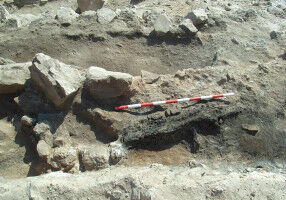
Archaeologists from the UK working in the Channel Island of Jersey have found the remains of a 14,000 year old hunter-gatherer settlement offering great views over landscapes now drowned by the English Channel. The site, called Les Varines, is located in the Jersey parish of St Saviour and has produced over 5,000 scattered stone artefacts during the past five years of excavation, but in the summer of 2015 the team unearthed denser concentrations of tools and burnt bone and, for the first time, fragments of engraved stone. These are currently under study in an attempt to unravel the significance of these unique finds. Dr Ed Blinkhorn, UCL Institute of Archaeology, who led the excavations, said: "This has been the culmination of five years of patient work, tracing thousands of flint tools within slope deposits back to the mother lode. We knew a significant hunter-gatherer camp lay in this field and it seems we've finally found it." - Hunter-gatherer settlement. The settlement sits on top of an ancient cliff line and geological investigation has shown that the camp probably sits in a small saddle in the landscape between an old sea stack and rising ground to the north. This situation would have afforded a degree of protection from the weather during a period when the climate was still relatively cold.