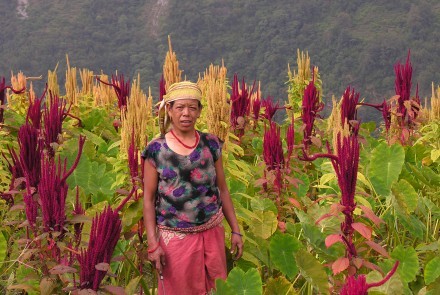
Nepalese woman in the Annapurna region of north-central Nepal. Photo credit: Mark Watson, Royal Botanic Garden Edinburgh
The way indigenous cultures around the globe use traditional medicines and pass on knowledge developed over centuries is directly linked to the natural environment, new research has found. This makes indigenous cultures susceptible to environmental change, a threat that comes on top of the challenges posed by globalisation. "Traditional medicine provides health care for more than half the world's population, with 80 per cent of people in developing countries relying on these practices to maintain their livelihood. It is a very important part of traditional knowledge," says Dr Haris Saslis-Lagoudakis, from The Australian National University's (ANU) Research School of Biology. "This knowledge is typically passed down from generation to generation, or it is 'borrowed' from neighbours. Because of this borrowing, globalisation can homogenise medicinal practices of different communities, leading to loss of medicinal remedies." But this is not the only challenge that indigenous cultures face. "Imminent changes in the environment also pose a threat to traditional knowledge," explains Dr Saslis-Lagoudakis.
TO READ THIS ARTICLE, CREATE YOUR ACCOUNT
And extend your reading, free of charge and with no commitment.